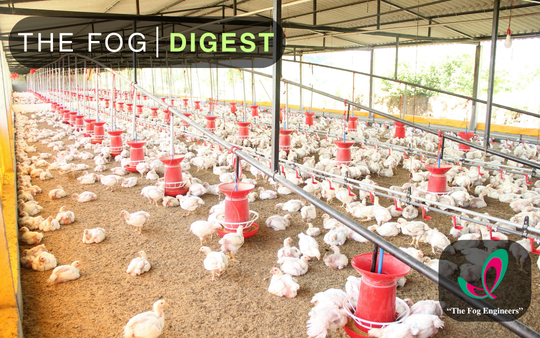
Environmental Control for Poultry Houses

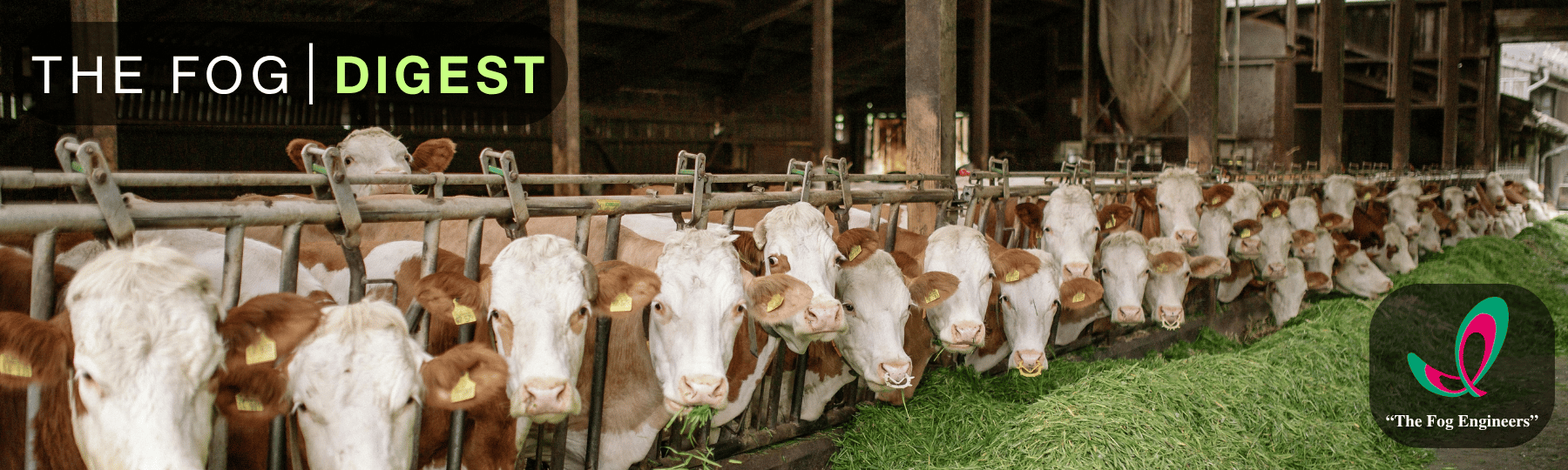
Heat stress does not stay confined to one barn type or one species. Whether the operation raises broilers, layers, swine, or dairy cattle, elevated temperatures create the same underlying problem: animals redirect energy toward staying cool instead of growing, producing, or reproducing. The signs differ slightly by species, but the economic exposure is consistent, and it tends to show up fastest in the animals with the least ability to dissipate heat on their own.
For producers managing barns, houses, or open-sided facilities, the question is rarely whether heat stress will occur. It is how much ventilation and cooling infrastructure can blunt it before it shows up on the scale, in the egg count, or in the breeding record.
Across species, unmanaged heat stress tends to show up in a similar sequence of problems:
The exact thresholds and sensitivity vary by species, breed, and even individual animal, so producers are best served working from their own veterinary and husbandry guidance for their specific operation. What holds across the board is the underlying mechanism: animals have a finite capacity to shed heat, and once ambient conditions push past that capacity, performance and welfare both suffer.
Ventilation is the first line of defense in most livestock facilities, and it matters. Moving air helps animals shed heat through convection. But in high ambient temperatures, particularly in open-sided or naturally ventilated structures, airflow alone often cannot bring conditions down to a safe range. The air being moved is still hot air.
This is where evaporative cooling becomes part of the strategy. Introducing fine water droplets into the airstream allows some of that heat to be absorbed as the water evaporates, lowering the effective temperature animals experience. The key variable is droplet size. Larger droplets wet surfaces, bedding, and feed before they have a chance to evaporate, trading a heat problem for a moisture and hygiene problem. Finer droplets evaporate more readily, which is what makes atomization performance central to whether a cooling system actually helps or just adds a new complication.
This is the specific role IKEUCHI’s KBN Series hydraulic spray nozzle is designed for. KBN produces a fine fog in the 35 to 60 micron range through a ceramic orifice engineered for consistent atomization and wear resistance, even in the mineral-heavy water conditions common on farms. Installed along the ceiling and matched to the facility’s ventilation pattern, KBN introduces cooling into the airstream where animals are housed, with output governed by the system’s design pressure and layout rather than a one-size-fits-all setup.
The goal is cooling without saturating bedding, feed, or flooring, since a facility that trades heat stress for persistent dampness has not solved the underlying welfare or hygiene problem. Every installation is customized to the specific facility. A poultry house, a farrowing barn, and an open freestall dairy setup all move air differently, and nozzle placement needs to reflect that rather than following a one-size-fits-all layout.
Heat stress is not a poultry problem or a dairy problem. It is a livestock problem, and the facilities that manage it best tend to be the ones that treat cooling as infrastructure rather than an emergency response. If your operation is evaluating how to bring evaporative cooling into an existing ventilation setup, our team can walk through what a properly sized KBN installation looks like for your specific facility.