Durability and Performance: The Long-lasting Benefits of TAIFUJet® Air Nozzles



You’re running a manufacturing line. Product moves through. Quality checks flag rejections. Rework happens. You adjust something, hoping it helps. But the defect rate stays stubbornly high in the same spots.
Most manufacturers assume the problem is upstream: the equipment, the material, the process parameters. What they don’t usually suspect is what happens during blow-off.
Blow-off is everywhere in manufacturing. After a wash step, you need parts dry. After machining, you need chips cleared. After coating, you need dust removed. After molding, you need cooling. It seems straightforward: point air at the part, problem solved.
But here’s what happens with a standard air nozzle: the air doesn’t distribute evenly across the blowing surface. The center delivers maximum force. The edges? They’re weaker. The pressure drop-off is gradual, but it’s real.
On a small part, you might not notice. On a wider surface that moves through your blow-off station at production speed, you absolutely will.
Look at your reject data with fresh eyes. Do the defects cluster in certain areas? Water spots on engine blocks that won’t dry on the edges. Chips left behind in tight corners of machined parts. Mold cooling that leaves hot spots at the sides, causing micro-stress fractures in plastic components. Paint dust settling unevenly on surfaces heading to the next station.
These aren’t random failures. They’re signatures of uneven air impact.
When air distribution is inconsistent, some parts of your product get adequate blow-off. Others don’t. The underdried or uncleaned sections then move into subsequent processes, where they either fail quality checks or cause problems downstream. Each reject triggers rework, which eats labor hours and line time.
The cost compounds. A single reject isn’t expensive. But rejects happening consistently in the same physical locations on your parts? That’s a pattern that costs thousands per month without anyone realizing where it’s coming from.
Industrial air nozzles have been engineered for decades. But engineering focused on delivering air efficiently, not necessarily on delivering it evenly. A conventional flat-jet nozzle gets the job done. It moves air. It removes chips. It dries surfaces.
What it doesn’t do is maintain consistent pressure and impact across its entire blowing width.
The consequence is production inefficiency disguised as part quality issues. When blow-off is uneven, some areas of the part get over-processed to compensate for others being under-processed. Operators slow the line down. They may increase air pressure, which burns energy and increases compressor load. They rework more. They scrap more.
Meanwhile, the actual problem—that their nozzle design can’t deliver uniform impact—remains undiagnosed.
Consider an automotive shop doing blow-off drying of engine blocks after a water wash. The nozzle has a 600 mm blowing width. The center hits hard. The edges, 300 mm away from center, deliver noticeably less force. On a fast-moving line, water at the edges doesn’t evaporate fully. Spots appear. Parts fail inspection. They go back for redrying or touch-up.
Or a CNC shop clearing chips from machined cavities. Uneven air means some chip pockets get cleared while others don’t. Tool wear accelerates because chips remain in the cut on subsequent passes. Tool life drops. Tool changes increase. Downtime increases.
Or a plastic molding operation cooling freshly molded parts. Uneven thermal impact means some areas cool properly while others cool too quickly or too slowly. Stress develops. Warping happens. Cosmetic or functional defects emerge. The rejection rate climbs.
In each case, the operator suspects the process or the equipment. They adjust parameters. They troubleshoot. They don’t suspect the air nozzle, because the nozzle is “working”—it’s delivering air.
But it’s not delivering air uniformly, and that’s what costs money.
When you look at your defect rate, ask these questions:
If the answer to any of these is yes, your nozzle design is likely the culprit.
The fix isn’t a process adjustment. It’s precision nozzle engineering.
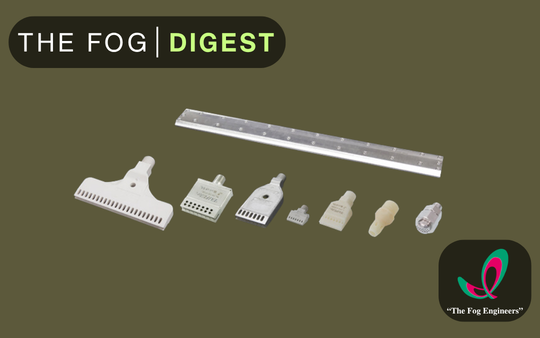
Engineered air nozzles, like those in the TAIFUJet series, are designed from first principles to deliver consistent impact force across the entire blowing width. This isn’t a minor variation. It’s a fundamental difference in how the nozzle channels and distributes air.
When air distribution is truly uniform, every point along the blow width receives the same force. This means every part of your component gets the same treatment, regardless of whether it’s at the center or the edge of the nozzle’s reach.
The practical result is fewer rejects in the same location, reduced rework, and the ability to run the line at full speed without compensating for uneven air delivery. You’re not adding more energy to the system. You’re using the energy you already have more effectively.
For a 600 mm wide blow-off station, uniform impact means the part drying quality at 0 mm, 150 mm, 300 mm, and 600 mm from center is consistent. No hot spots. No cold spots. No hidden rejects waiting to fail downstream.
Your defect rate isn’t random noise. It’s information. When you dig into the pattern, it often points to something specific. Uneven blow-off is easy to miss because it happens invisibly during an invisible step. But the data doesn’t lie.
The next time you see a clustering of rejects that doesn’t match your process parameters, consider the nozzle. Look at the physical distribution. Ask whether your current air nozzle is delivering truly uniform impact, or whether it’s delivering adequate air in the center while leaving the edges to fend for themselves.
That question might be the most profitable conversation you have with your quality data this year.