Automotive Paint Booth Environmental Control

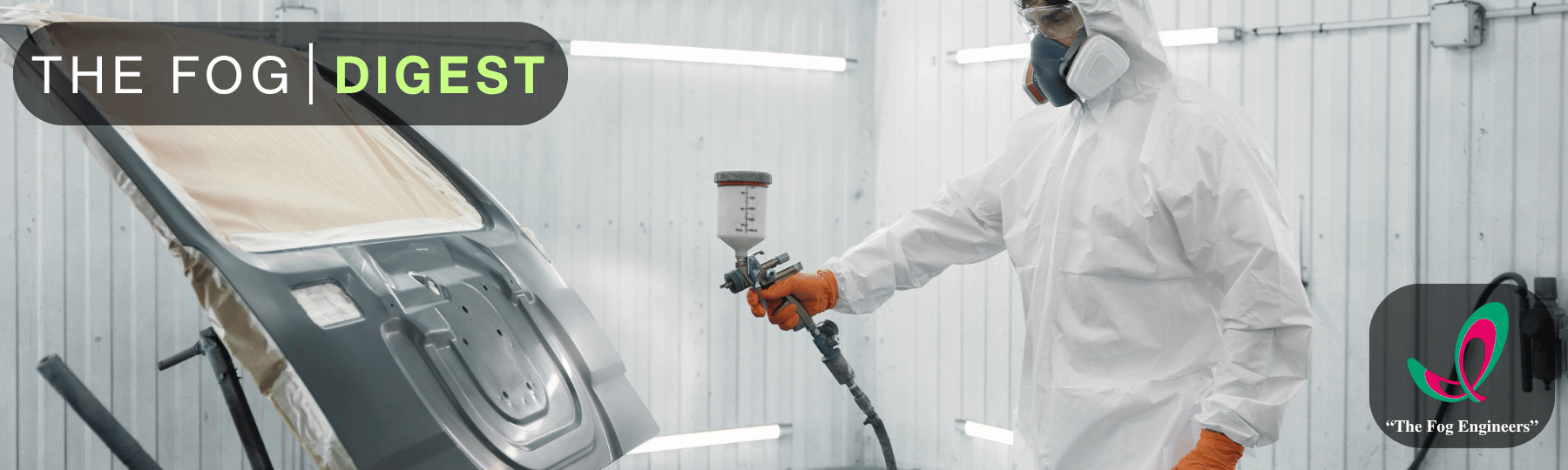
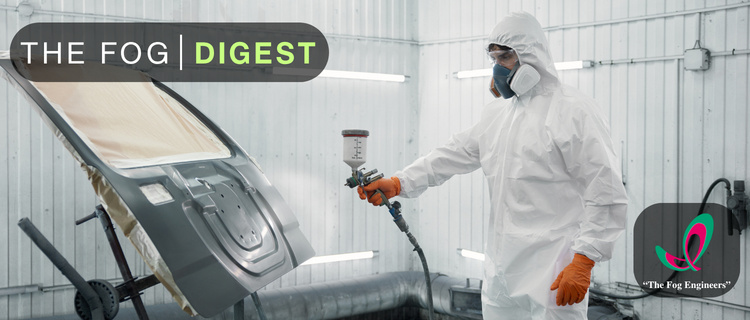
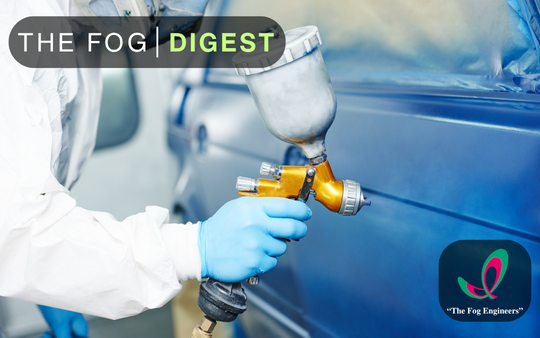
High-quality automotive paint finishes demand a controlled environment where even the smallest dust particles or electrostatic charges can impact results. While traditional filtration and cleaning methods help, combining advanced humidity control with targeted particle capture can provide a more consistent and reliable solution.
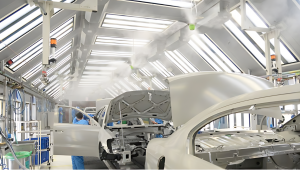
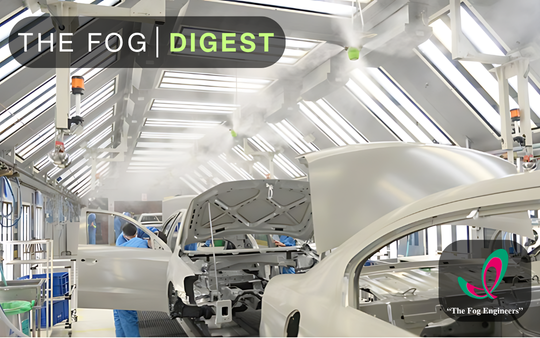
Dry Fog humidification offers a dual benefit in paint environments: dust suppression and static mitigation. The ultrafine droplets disperse evenly, raising humidity without wetting surfaces. Increased humidity stabilizes airborne particles, preventing them from drifting onto freshly painted surfaces.
In addition to controlling dust, Dry Fog reduces static electricity — a critical factor in automotive paint lines. Static charges can attract dust to surfaces and even affect paint adhesion. By creating a balanced, controlled humidity environment, Dry Fog helps minimize electrostatic buildup, supporting both product quality and worker safety.
While Dry Fog controls airborne particles, some dust may remain suspended or be generated during operations. Tacky mesh acts as a complementary measure: its adhesive surface captures dust before it reaches paint lines or finished parts. Strategically placing mesh panels along airflow paths or near critical painting zones intercepts remaining particles, further reducing the risk of surface imperfections.
The combined approach — suppressing dust and static with Dry Fog, then capturing residual particles with tacky mesh — creates a cleaner, more controlled painting environment without introducing surface wetness or disrupting airflow.
Delivering an effective solution requires more than just hardware; it requires expertise. RJ Hanlon brings decades of experience in automotive manufacturing environments, understanding airflow patterns, dust sources, and operational constraints. Ikeuchi contributes specialized knowledge in precision dry fog humidification, nozzle technology, and system integration.
Together, the teams develop customized solutions for each facility. An Ikeuchi fog engineer works closely with RJ Hanlon experts to design a layout that optimizes fog placement, mesh positioning, and system operation, ensuring that both dust and static are controlled efficiently. This collaborative approach leverages the strengths of both companies to support a high-quality, consistent paint process.
Combining Dry Fog and tacky mesh provides automotive paint facilities a comprehensive, technically grounded solution for dust and static control. By integrating suppression, capture, and expert-driven design, this dual approach supports consistent finishes, reduces defects, and enhances overall production reliability.