Spray Nozzles Cut Sanitizer Consumption by 70% in Seafood Processing

Solutions or Products Featured
in This Case Study
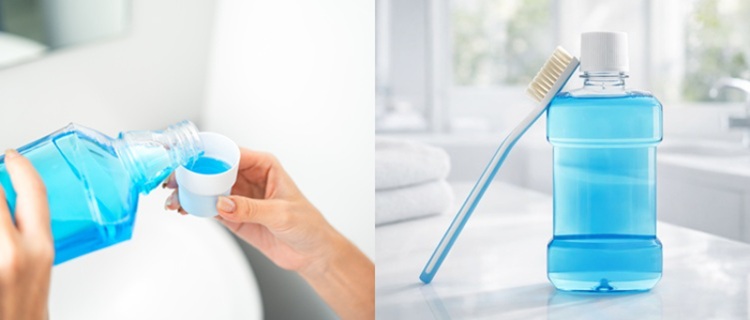
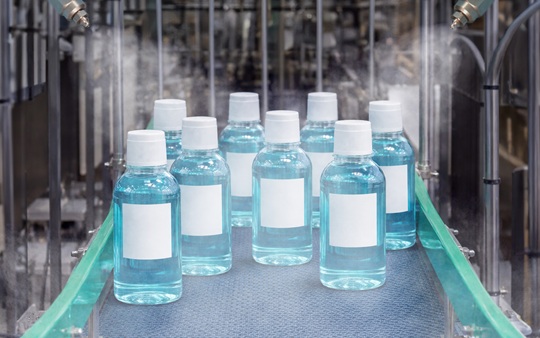
A production equipment engineer at a mouthwash manufacturing facility was tasked with integrating an additional unit into an existing packaging line.
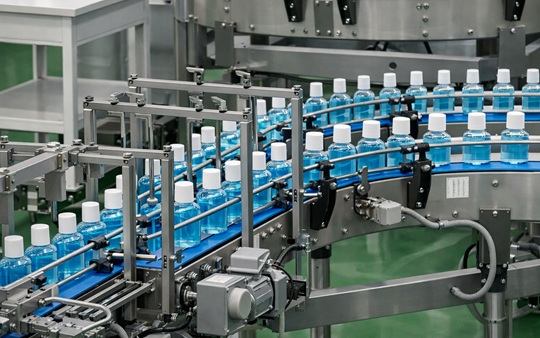
Mouthwash production consists of four primary stages: formulation, bottle filling, packaging, and shipment.
Among these, packaging is particularly critical. It includes shrink-film wrapping of filled bottles, label application, and lot-code printing—operations that directly affect product appearance and shape the consumer’s first impression.
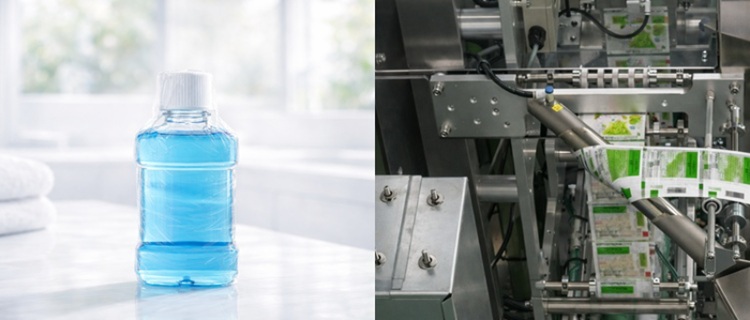
The planned addition was a process to apply an antistatic agent to products after completion of the entire packaging sequence.
The purpose was to suppress electrostatic charge, prevent dust adhesion to packaged bottles, and maintain a cleaner condition through final visual inspection and shipment.
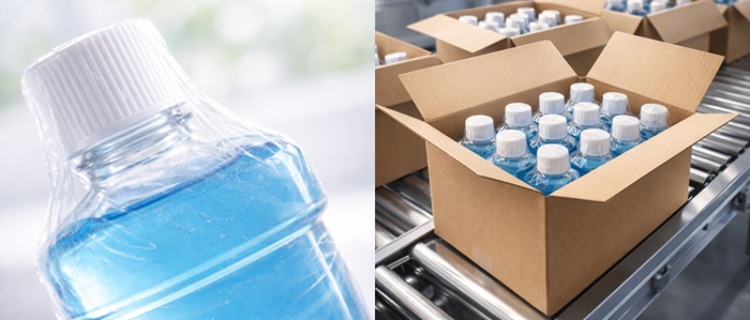
Application by spray gun was initially considered. However, because the packaging line was fully automated, it was impractical to assign an operator to perform this process manually.
Furthermore, implementing a spray gun system would have required a relatively large and complex installation, creating additional design constraints.
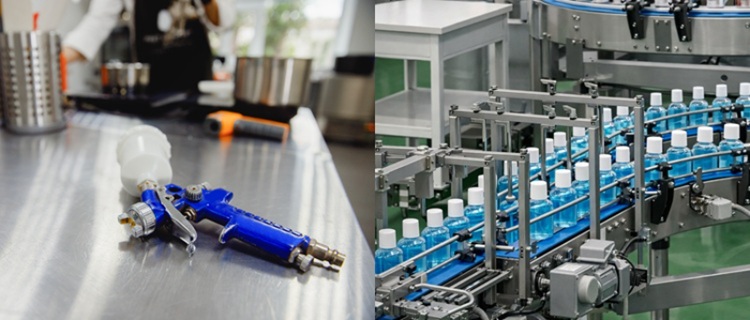
The customer therefore needed a compact, automated spraying system that could be easily integrated into the packaging line, and consulted IKEUCHI, a manufacturer specializing in industrial spray nozzles.
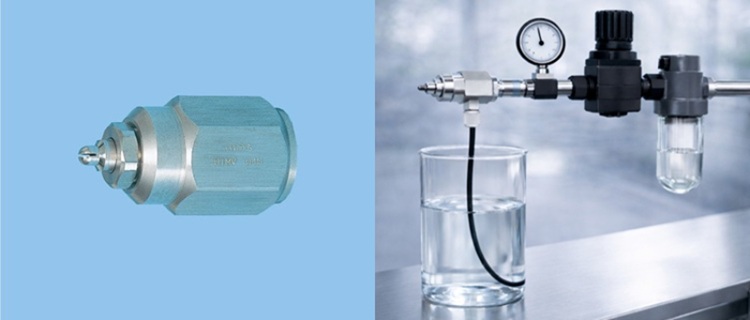
After reviewing the application requirements, IKEUCHI selected a pneumatic spray nozzle that uses compressed air to atomize the antistatic agent into fine droplets.
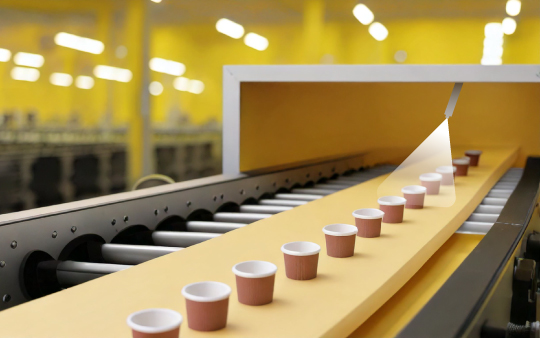
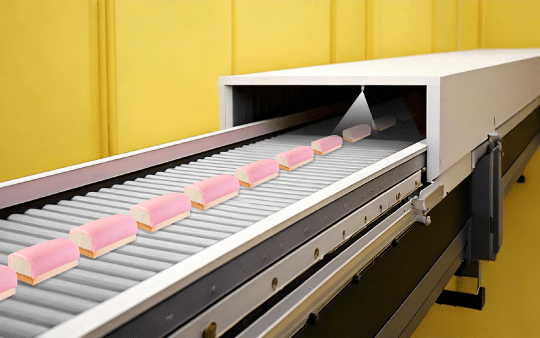
To achieve full coverage across the conveyor width, IKEUCHI focused on the BIMV series, which produces a flat-fan spray pattern. The BIMV-S model was selected because it features a suction feed mechanism that draws up the liquid using compressed air.
With this suction feed mechanism, no pump is needed to pressurize and supply the liquid to the nozzle, allowing a simpler system configuration. By storing the antistatic agent in a tank and connecting it to the nozzle with tubing, the system can spray the agent as a fine mist using only compressed air.
This configuration eliminates the need for continuous manual operation and supports automated spraying as part of the packaging line.
Related Article: How liquid feeding systems work in pneumatic spray nozzles
Spray testing confirmed that the antistatic agent was atomized to a droplet size of approximately 20–30 µm and discharged in a flat-fan spray pattern.
The spray covered the full conveyor width and achieved uniform application across the entire surface of bottles in motion. Antistatic agent consumption was kept below 1 liter per hour.
IKEUCHI’s pneumatic spray nozzle series will continue to support process automation and labor savings, while helping customers maintain and improve product quality and reduce water and chemical consumption.
Relevant SDG goals for this case.