
Fiber Drum Manufacturing | Improving Product Quality and Productivity Through Humidity Control

Solutions or Products Featured
in This Case Study
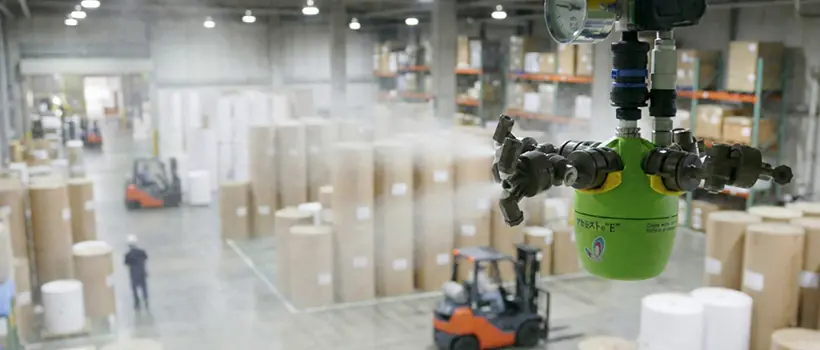
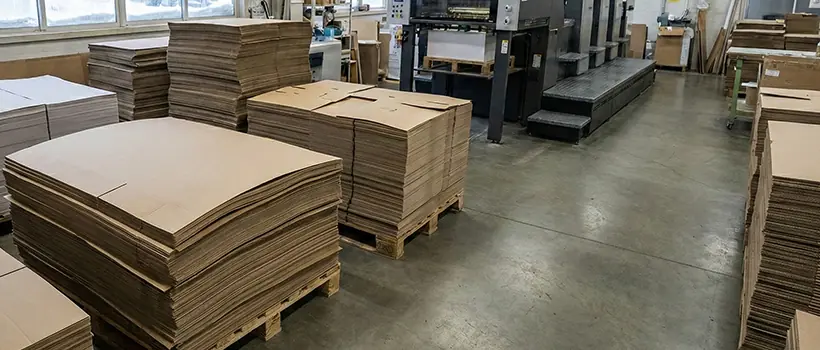
At a packaging manufacturing plant, dry winter conditions were causing serious quality issues during the die-cutting and assembly processes for printed cartons, corrugated cases, and other paper-based packaging products.
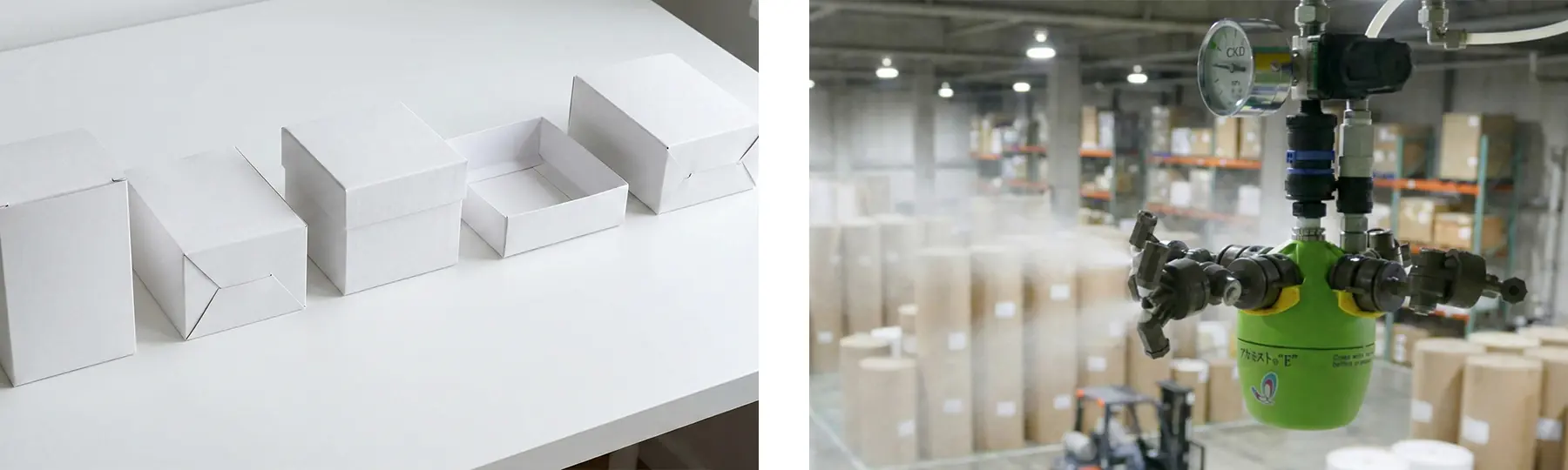
Falling humidity dried out the packaging paper stock, triggering frequent warping and cracking during processing. These defects directly resulted in product quality issues and customer complaints.
The impact extended beyond product quality: responding to complaints consumed valuable time and placed a heavy burden on operators. As a result, improving the low-humidity environment became an urgent priority.
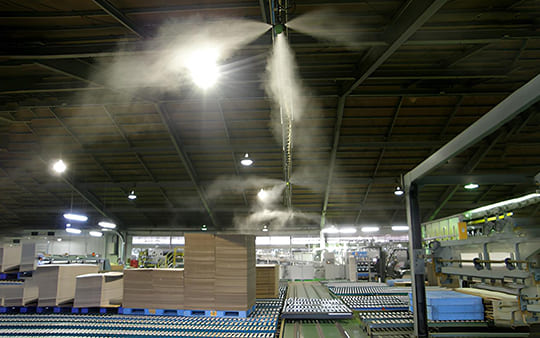
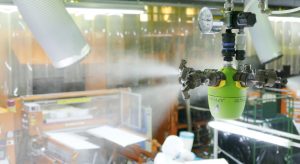
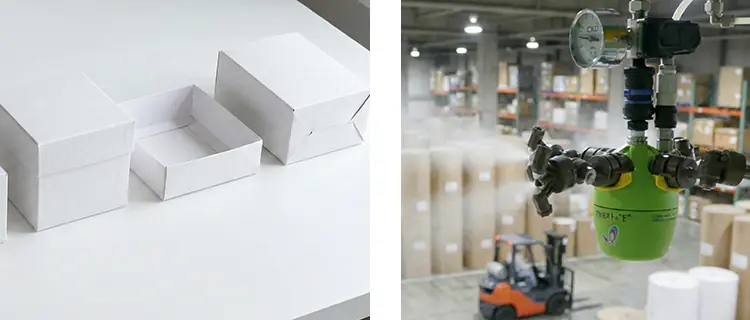
The proposed solution was AirAKI, IKEUCHI’s industrial humidification system designed to prevent production problems caused by low humidity and static electricity. The system uses compact yet powerful AKIMist “E” humidifiers with AKI03C nozzles to generate Dry Fog with a mean droplet diameter of 7.5 μm.
The production area was extensive. Humidifying the entire space would have required a large number of humidifiers, resulting in higher initial and operating costs.
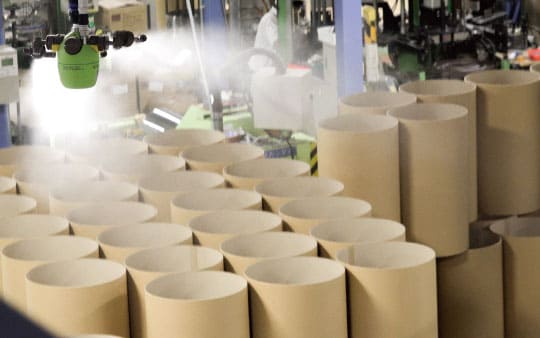
Instead, IKEUCHI proposed humidifying the packaging paper stock storage area before processing, allowing the material to retain sufficient moisture before entering the production line.
By increasing the moisture content of the packaging paper stock before processing, the material remained flexible even after being transferred to the production area, reducing the risk of cracking and warping.
Because outdoor air could easily enter the area, IKEUCHI proposed installing vinyl curtains at the entrances to reduce air exchange. This allowed the system to be designed with the optimal number and placement of humidifiers for stable and efficient humidity control.
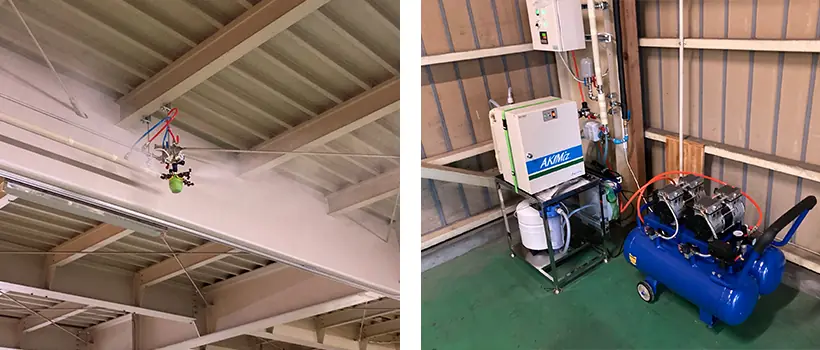
Before AirAKI was installed, humidity in the target area had remained around 10%. After installation, humidity stabilized at approximately 50% RH, eliminating unnecessary work and reducing the burden on operators.
With the packaging paper stock maintained at the proper moisture content, warping and cracking during processing dropped sharply. Complaints tied to defective products, once a persistent issue, fell to nearly zero.
Humidity control in the company’s own warehouse now gives the customer greater flexibility in inventory management. The operation is less labor-intensive, and workflow efficiency has improved significantly.
Relevant SDG goals for this case.