Articles by Industry: Agriculture | Benefits of Dry Fog in CEA | Greenhouse Humidity Management | Advanced Humidification for Indoor Farming | Optimize Crop Yield | Sustainable Farming

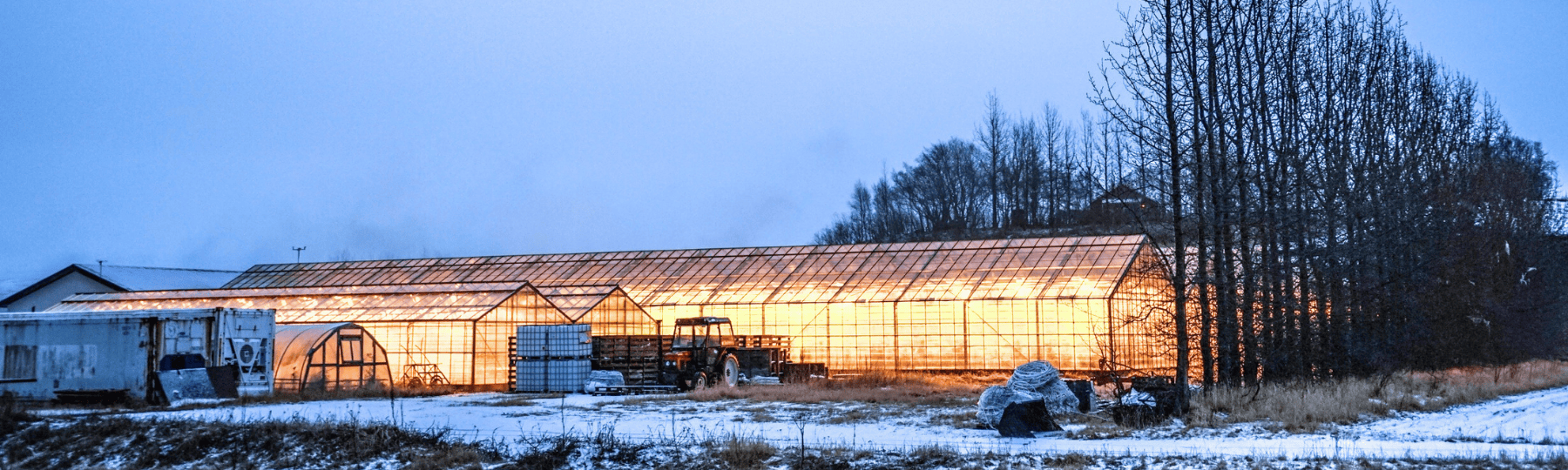
Winter presents a unique set of challenges for greenhouse and indoor growers. While outside temperatures drop, heating systems work harder to maintain optimal growing conditions. One of the most common side effects of winter heating is dry air, which can quickly disrupt humidity balance inside controlled environments.
Without proper humidity control, winter conditions can introduce plant stress, uneven growth, and increased operational challenges. Maintaining stable humidity during the colder months is essential for protecting crops and ensuring consistent production.
Cold outside air holds less moisture. When that air is brought into a greenhouse or indoor facility and heated, relative humidity drops significantly. This sudden reduction in humidity increases transpiration rates, forcing plants to lose water more rapidly than intended.
For growers, this can result in slowed growth, nutrient uptake issues, and inconsistent crop development across the growing space. Dry winter air can also increase dust levels and static conditions, which may further impact sensitive crops and equipment.
These challenges are often amplified in facilities with high air exchange rates or large temperature differentials between day and night.
Stable humidity during winter supports balanced vapor pressure deficit, helping plants regulate water loss even as heating systems cycle on and off. When humidity fluctuates, plants are forced to constantly adapt, which can divert energy away from growth and development.
Consistent humidity levels help reduce plant stress, promote uniform growth, and support predictable production timelines. This stability is particularly important during early growth stages, propagation, and transplanting, when plants are more sensitive to environmental changes.
By maintaining a controlled humidity range throughout winter, growers can protect crop quality while reducing the risk of seasonal setbacks.
Many traditional humidification methods struggle during winter operation. Larger droplets may not fully evaporate in cooler air, leading to wet surfaces and localized moisture buildup. In winter, this excess surface moisture can persist longer, increasing the risk of disease and condensation related issues.
In addition, some systems cannot respond quickly enough to frequent heating cycles, resulting in wide humidity swings that are difficult to manage consistently.
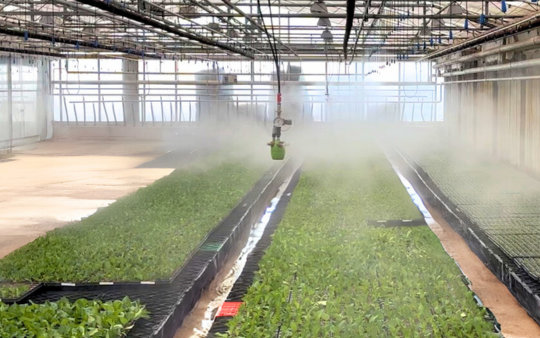
Dry Fog humidification is well suited for winter growing environments because it produces ultra fine droplets that evaporate rapidly, even in cooler air. This allows humidity levels to rise evenly without wetting plants, benches, or structural surfaces.
Because Dry Fog increases humidity without condensation, it supports a clean and stable growing environment throughout winter heating cycles. Uniform distribution helps eliminate dry zones and reduces microclimate formation, which is especially important when outside conditions are changing rapidly.
The ability to maintain consistent humidity during winter allows growers to focus on plant performance rather than reacting to environmental fluctuations.
While winter primarily requires heating, Dry Fog systems can still contribute to environmental stability through evaporative effects. As droplets evaporate, they absorb heat from the air, helping moderate temperature fluctuations caused by heating equipment cycling.
This gentle buffering effect supports more consistent conditions without introducing moisture directly onto plant surfaces. The result is a more balanced winter climate that supports both plant health and operational efficiency.
Effective winter humidity control is not a short term fix but a strategic investment in environmental stability. Systems designed for non wetting humidification can reduce maintenance demands, protect infrastructure, and support consistent results year after year.
For growers planning seasonal transitions, addressing humidity control before winter conditions intensify can prevent stress related issues and improve overall crop performance during the coldest months.
Winter humidity management is a critical component of successful greenhouse and indoor growing operations. Dry air caused by heating systems can disrupt plant health and production consistency if left unaddressed. By implementing precise, non wetting humidification, growers can maintain stable environments that support healthy crops throughout the winter season.
At Ikeuchi, we work with growers to provide Dry Fog humidification solutions designed to perform reliably in winter conditions, helping maintain consistency when environmental control matters most.

Articles by Industry: Agriculture | Benefits of Dry Fog in CEA | Greenhouse Humidity Management | Advanced Humidification for Indoor Farming | Optimize Crop Yield | Sustainable Farming

Dry Fog For Cannabis Cultivation | How to Grow Quality Bud | Indoor Grow for Cannabis
Humidity: The Hidden Ingredient for Healthier Crops & Higher Yields