
Mushrooms Have Needs Too… | Humidity Control for Mushroom Cultivation | Dry Fog for Mushroom Growing

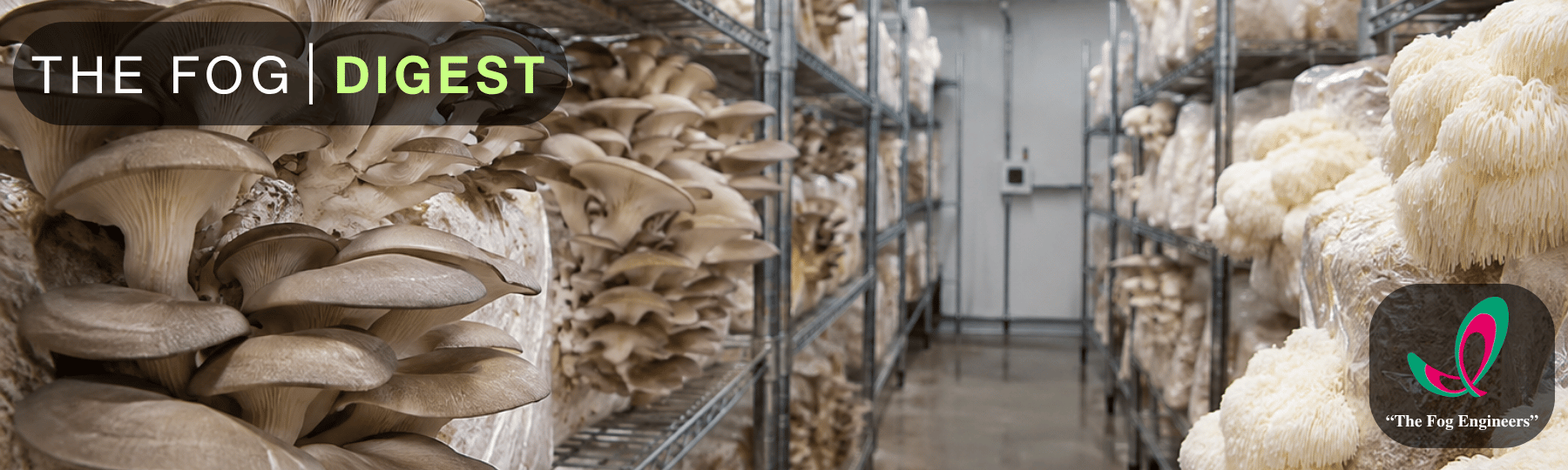
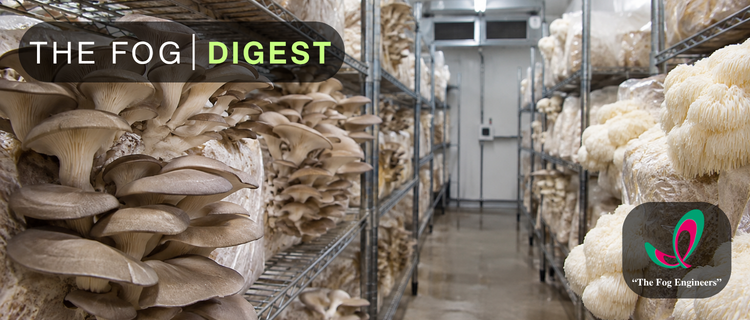
If you ask a mushroom grower what keeps them up at night, the answer usually isn’t yield; it’s contamination. One outbreak of mold or bacterial blotch can wipe out weeks or months of work, and in an enclosed grow room it can spread before anyone notices. The hard part is that the conditions mushrooms need to thrive sit very close to the conditions pathogens thrive in. Managing that line comes down largely to how humidity gets into the room.
Mushrooms are mostly water, and during fruiting they lose moisture through their surfaces constantly. To keep developing pins and caps from drying out, growers typically hold relative humidity high, often in the 80 to 90 percent range or above, depending on the species. When the air falls short, the signs show up quickly: cracked or leathery caps, pins that stall or abort, and uneven flushes.
High humidity in the air is not the same thing as water on surfaces, though. Moisture that collects on caps, substrate blocks, shelving, and walls forms exactly the film that bacteria and molds need to take hold. Bacterial blotch, for example, is closely associated with caps that stay wet for long periods. The goal is a room that feels like the air after a rainfall, without the puddles.
The second pressure on the fruiting room is carbon dioxide. Growing mushrooms respire and release CO2, and when it builds up, many species develop long stems and undersized caps. The standard fix is frequent fresh air exchange.
Every exchange brings in air that is almost always drier than the room. In a compact space with high turnover, humidity can drop within minutes. That means the humidification system isn’t just topping off the room now and then. It is working continuously against a steady drain, and any gap in output shows up on the crop.
Many growers start with ultrasonic humidifiers or homemade misting setups because they are affordable and easy to find. Both can raise humidity, but each brings its own risks into the room.
The result is a humidity system the grower has to manage as a contamination source in its own right.
FreeSol Farms, a gourmet mushroom operation in Texas growing oyster, lion’s mane, maitake, and other specialty varieties, described this tension in a recent case study with Ikeuchi. Founder Jacob Purcell keeps his rooms between 80 and 90 percent relative humidity and 50 to 65°F, with high air exchange. “Mushrooms need extremely high humidity, but you also have to keep surfaces dry,” he explained. “Too wet and you create ideal conditions for pathogens. Too dry and growth stops.”
After moving away from ultrasonic units, the benefits he pointed to were practical ones: no standing reservoir to contaminate, no soaked surfaces, a straightforward setup that connects to water and air, and consistent humidity even with the room constantly turning over. He also noted how unforgiving long crop cycles can be. For maitake, which takes about three and a half months from start to harvest, a single day of failed humidity can mean losing the crop.
Ikeuchi defines Dry Fog as fog with a Sauter mean droplet diameter of 10µm or less. The AKIMist®E Dry Fog Humidifier operates at 7.5µm Sauter mean droplet diameter, using an air-assisted nozzle that combines water and compressed air. At that size, droplets evaporate into the air before they settle, so humidity rises without wetting caps, substrate, or shelving.
For mushroom rooms, a few characteristics stand out:
Water quality is part of the picture too. A water purifier or reverse osmosis supply keeps nozzles clean and avoids introducing impurities into the room. Like any equipment in a grow space, nozzles benefit from periodic cleaning, and keeping spare tips on hand helps protect uptime. The AKIMist®E adds moisture to the air, so it works alongside your ventilation and temperature control rather than replacing them.
In a fruiting room, humidity is not just one variable among many. It’s the one that decides whether the environment supports the crop or the contamination. The goal is simple to state and hard to hold: air that’s wet, surfaces that aren’t.

Mushrooms Have Needs Too… | Humidity Control for Mushroom Cultivation | Dry Fog for Mushroom Growing
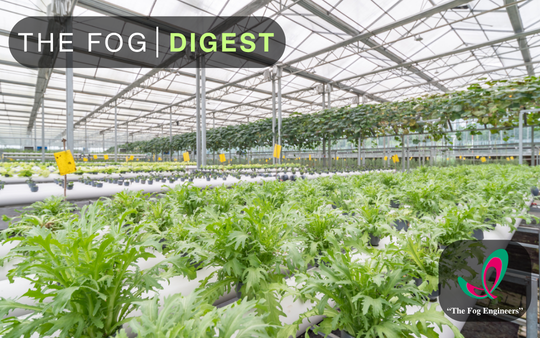
Articles by Industry: Agriculture | Benefits of Dry Fog in CEA | Greenhouse Humidity Management | Advanced Humidification for Indoor Farming | Optimize Crop Yield | Sustainable Farming
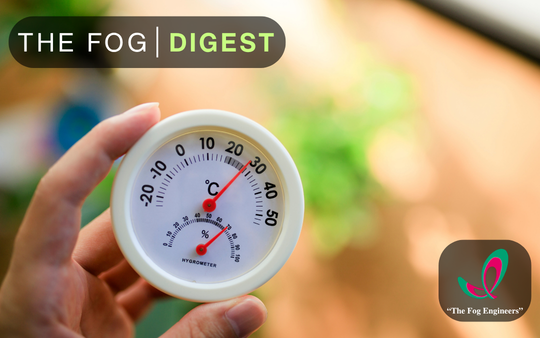
Optimal Humidity Levels For Each Industry | Diverse Industries, One Solution | Maximum Efficiency with Dry Fog