Uniformly Moistening Deep inside the Yarn Cone

Solutions or Products Featured
in This Case Study
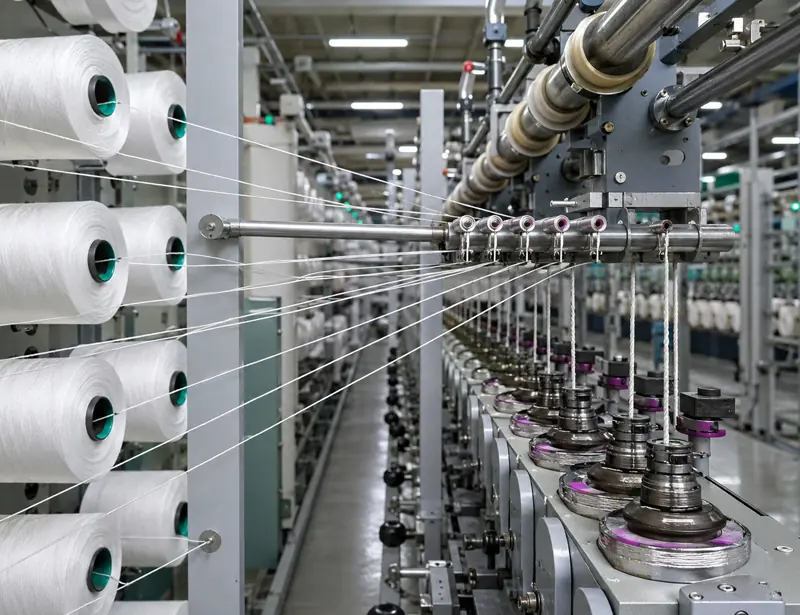
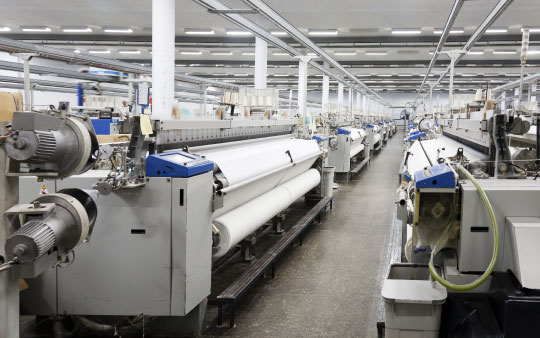
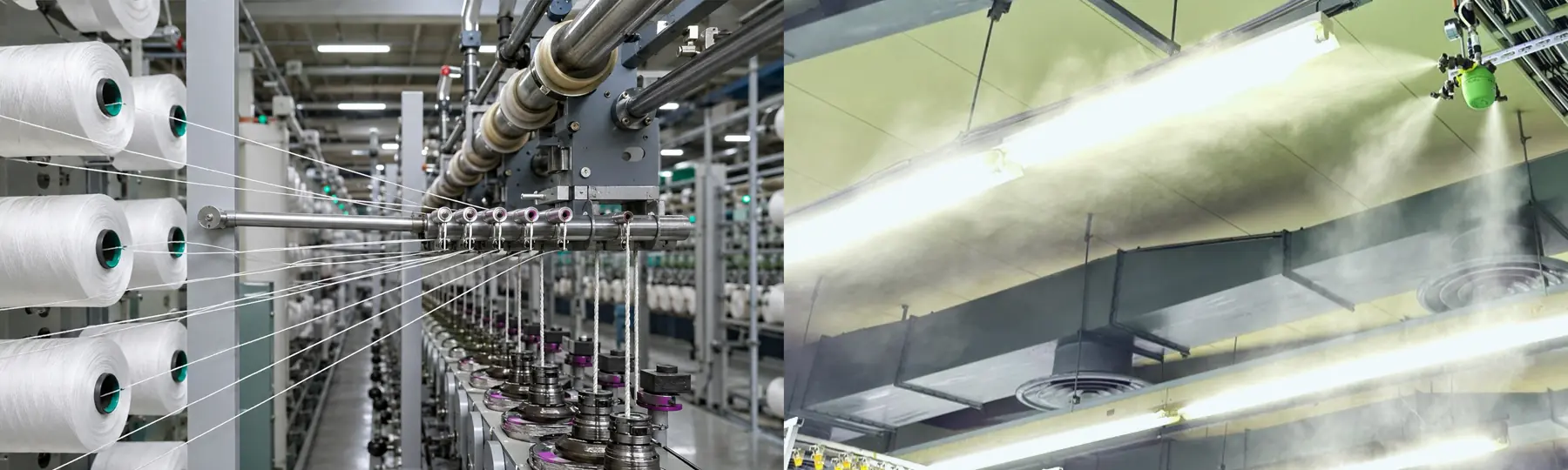
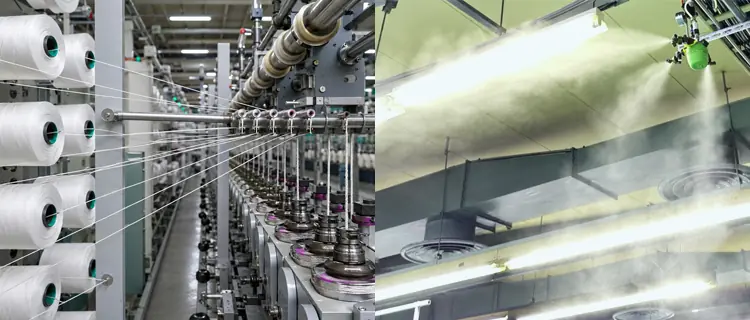
False-twist texturing is a process in which synthetic yarns, such as nylon and polyester, are twisted, heat-set, and then untwisted. This process gives the yarn greater bulk and elasticity, while also helping to reduce uneven dyeing and improve yarn strength by making its internal structure more uniform.
Maintaining appropriate humidity is important in this process to prevent yarn breakage and other problems caused by dryness and static electricity.
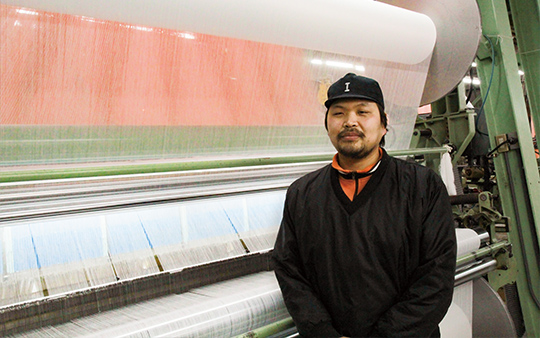
At a textile factory, approximately 20 very fine filaments are combined to form a single yarn during processing. These fine filaments are highly susceptible to dryness and static electricity, making it difficult to maintain consistent product quality.
If some filaments break or fail to come together properly due to static electricity, the resulting fabric can develop an uneven appearance. These problems were particularly severe during winter, when low humidity affected product quality.
The factory was using a drip-type humidifier built into a packaged air-conditioning unit, but it could not raise humidity sufficiently. The humidifier’s water tank also became dirty quickly, requiring frequent cleaning and maintenance.

Seeking a solution to low humidity and static electricity, the customer consulted IKEUCHI.
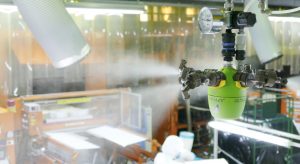
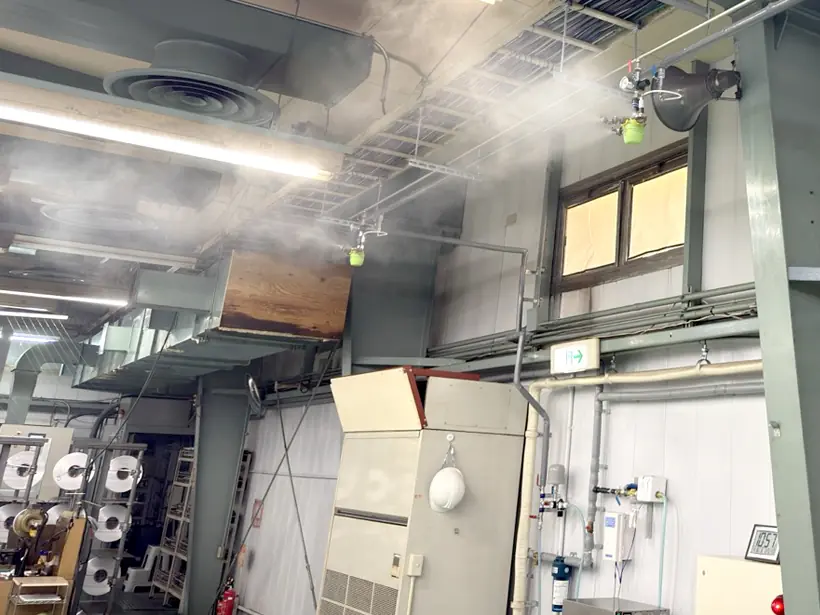
IKEUCHI conducted an on-site demonstration using its Dry Fog humidifier to evaluate whether it could effectively address the dryness and static electricity problems.
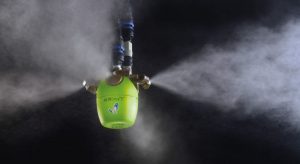
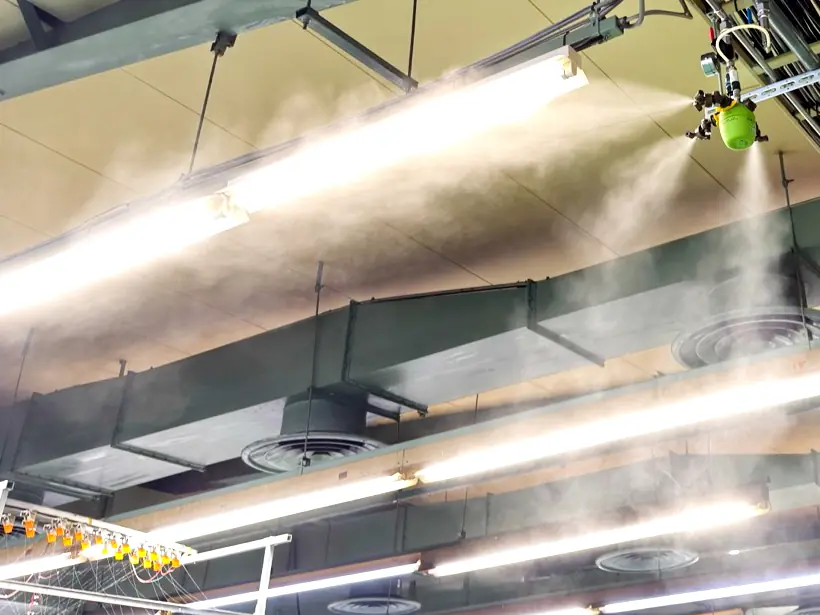
The demonstration produced positive results. The customer confirmed that the fine mist did not wet the machinery or products, eliminating one of their main concerns. They also found the humidifier much easier to maintain than expected.
Based on these results, IKEUCHI designed an AirAKI humidification system using AKIMist “E” Dry Fog humidifiers.
Due to limited installation space, a layout was proposed to humidify the production area from one side of the factory.
Relevant SDG goals for this case.