Boosted Productivity in Notebook Manufacturing with Dry Fog Humidification

Solutions or Products Featured
in This Case Study

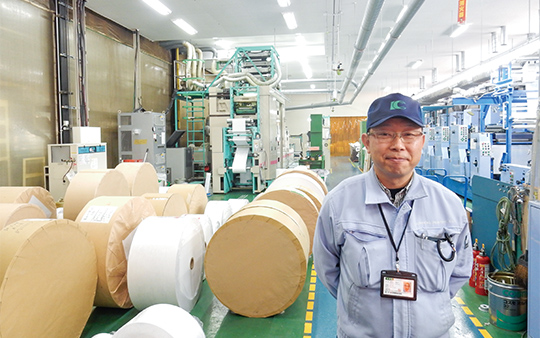
One industrial packaging manufacturer specializing in paper-based containers produces fiber drums.
What is a fiber drum?
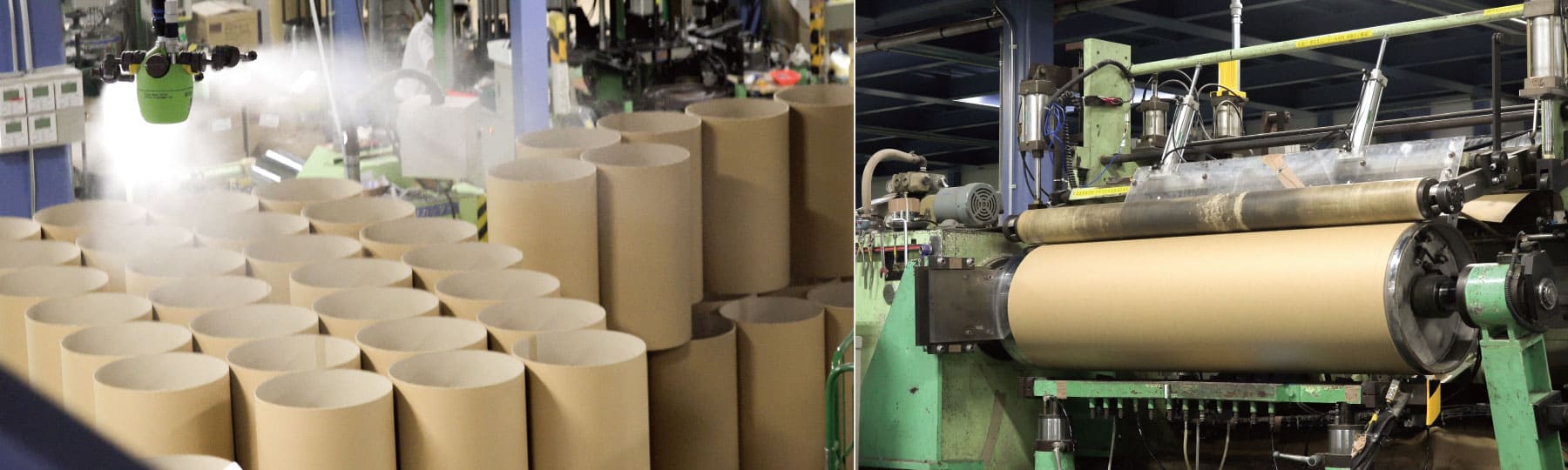
A fiber drum is essentially a paper drum. It is lightweight, easy to handle and recycle, cost-effective, and can be manufactured in a wide range of sizes. It is used mainly to transport powders in the chemical and pharmaceutical industries.
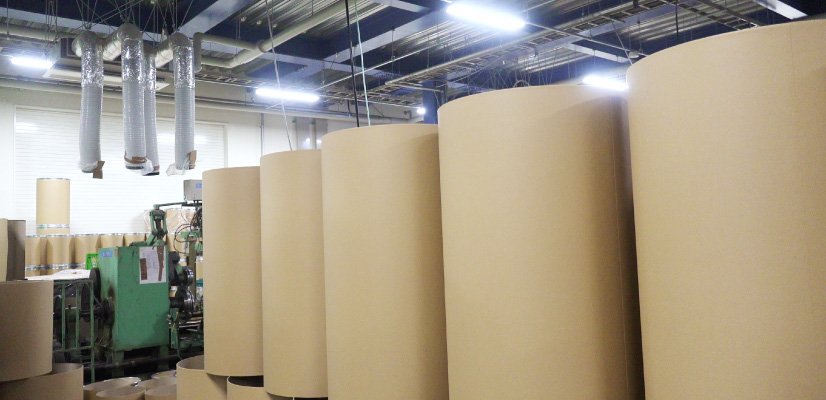
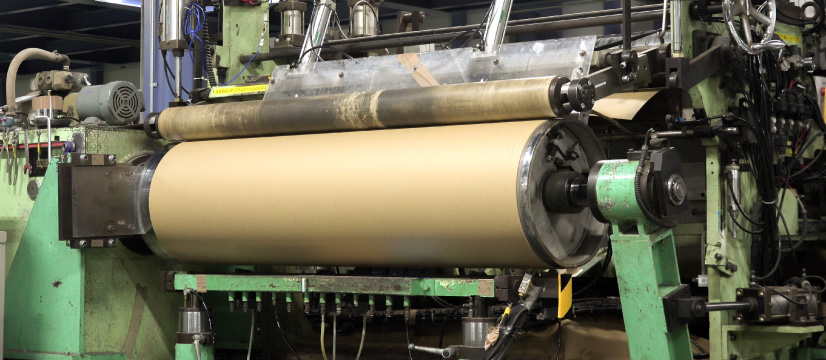
The production process has two main stages: winding paper to form drum bodies, and then folding the ends of the drum bodies inward to attach and crimp the lids and bottom plates.
When the drum bodies dried out, cracking occurred during processing, especially during the folding step. Because paper is highly sensitive to temperature and humidity, environmental control on the production floor had long been a major challenge.
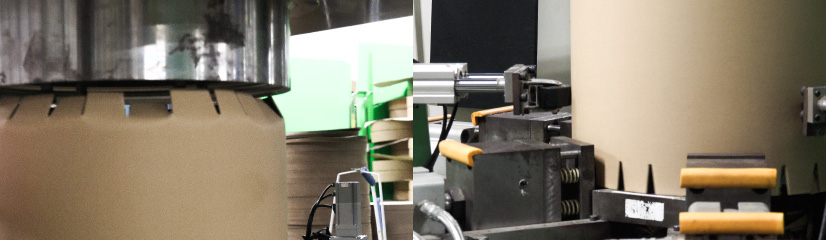
Since the plant’s production flow depended on having enough drum bodies ready for the next process, it needed to keep a sufficient number on hand. However, when the drum bodies were wound the previous day, they dried out overnight and cracked during folding the next morning. As a result, winding operators had to arrive as early as 4:00 or 5:00 a.m. so both processes could be carried out on the same day.
The plant tried measures such as leaving spot coolers and heaters running overnight and sprinkling water on the floor, but none proved effective.
When cracking occurred, the plant had to conduct 100% inspections and sometimes stop the line to rewind the drum bodies, leading to significant losses.
When the plant relocated, the new facility made it possible to maintain a more enclosed production environment. At that point, the customer consulted IKEUCHI about a fundamental review of humidity control throughout the plant.
AirAKI, IKEUCHI’s industrial humidification system, generates Dry Fog and maintains optimal humidity levels on production floors. It also enables automatic humidification control while making humidity conditions visible across the plant.
Before implementation, the customer tested a demo unit on site and found that its humidification performance exceeded expectations. This convinced them that it could reduce the cracking problem.
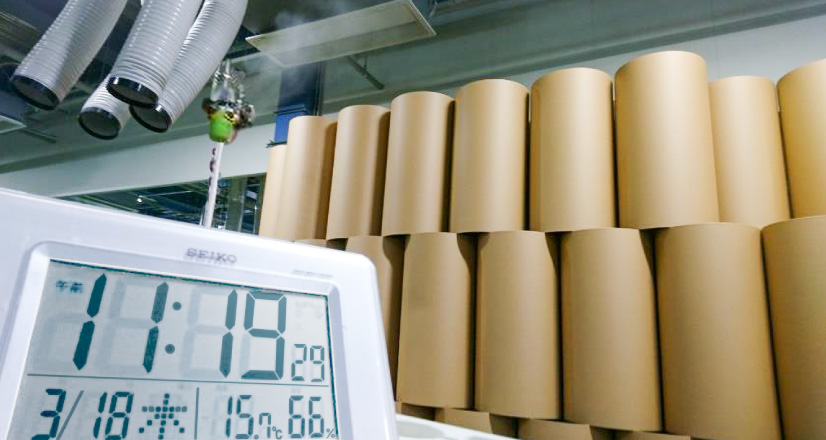
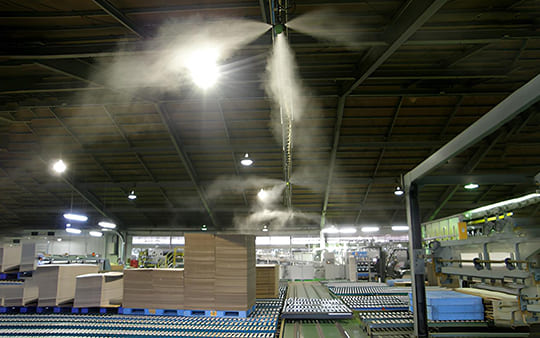
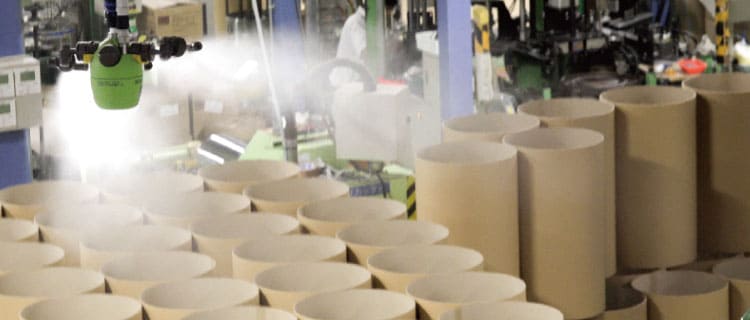
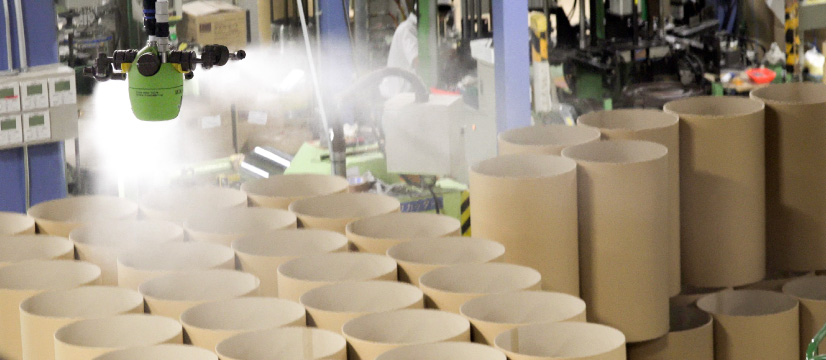
On-site demonstration. Humidity quickly rose to nearly 70%.
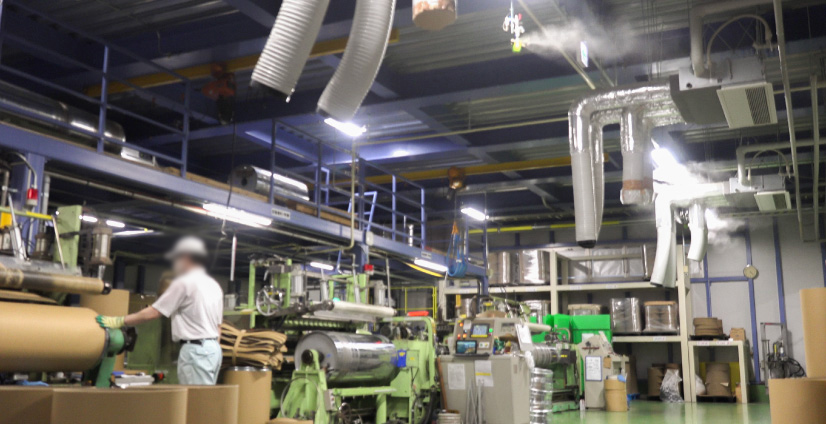
AirAKI in operation in the drum body winding area
After AirAKI was installed, cracking-related defects fell to less than half their previous level. Winding and storing drum bodies the day before—which had previously been difficult—became possible, reducing morning waiting time on the line.
Productivity improved significantly, and the need for employees to come in early disappeared entirely, contributing to higher employee satisfaction.
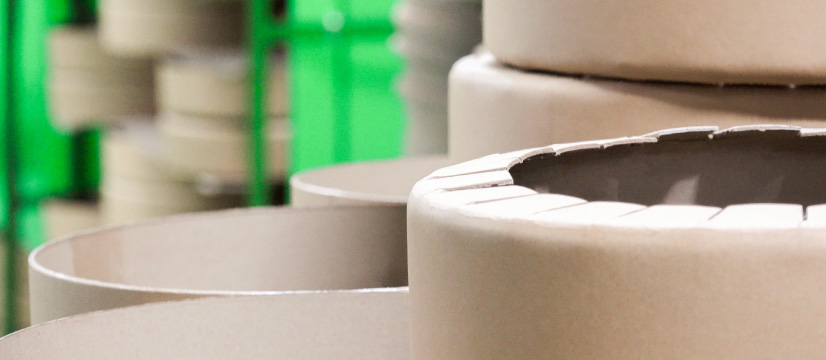
Even when drum bodies were wound the previous day, cracking no longer occurred during folding
Although the system was originally introduced as a countermeasure against dry conditions in autumn and winter, the new plant’s more enclosed environment created a new issue in summer: the air conditioning dried the space too much. Because AirAKI automatically adjusts humidity based on sensor readings, it is now used year-round, including in summer.
Compared with the previous operation, which relied on continuously running heaters and spot coolers, electricity costs dropped substantially.
The customer commented that the investment had essentially paid for itself in about two years—well ahead of the initial 3.5-year estimate—thanks to major savings on electricity costs.
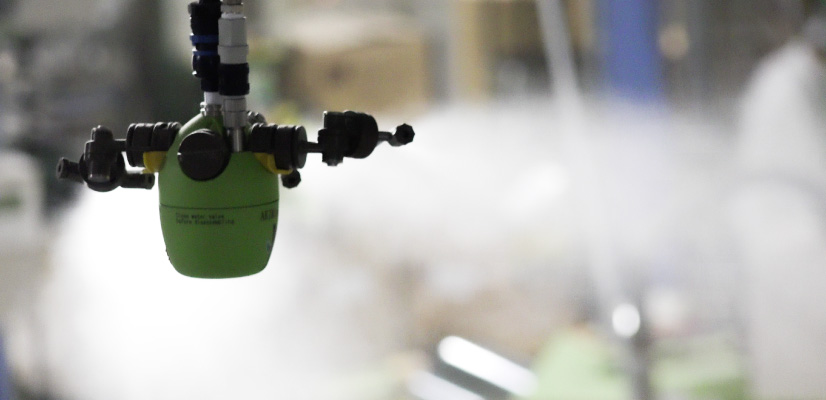
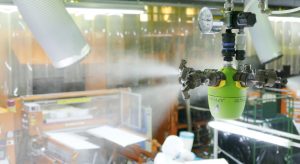
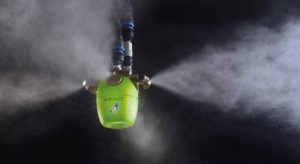
AKIMist “E” Dry Fog Humidifier
This case clearly shows how proper humidity control can help manufacturing sites address product quality issues and productivity losses caused by dry conditions.
For plants seeking both stable quality and higher productivity, it can be highly effective to reconsider humidification not as an isolated countermeasure, but as part of an overall improvement in the working environment.