Interview: IKEUCHI ORGANIC | Humidity Control Solved Floor Wetting & Weaving Issues in Towel Production

Solutions or Products Featured
in This Case Study
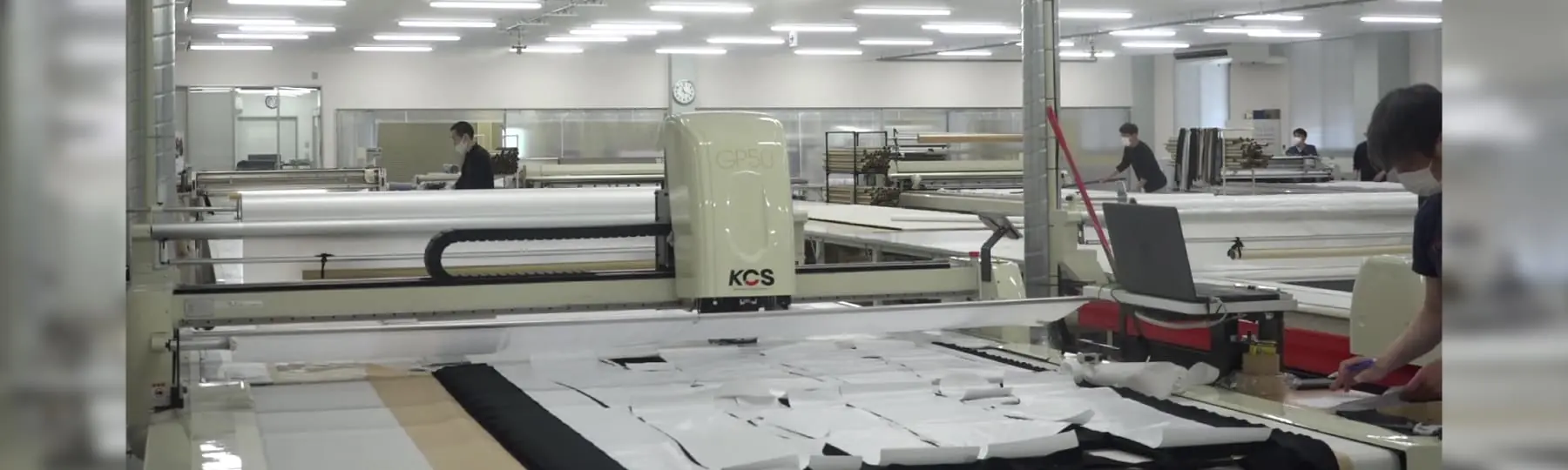
At an apparel manufacturing plant handling fabric cutting and related processes, increased outside air intake following a factory relocation made static electricity problems worse during winter.
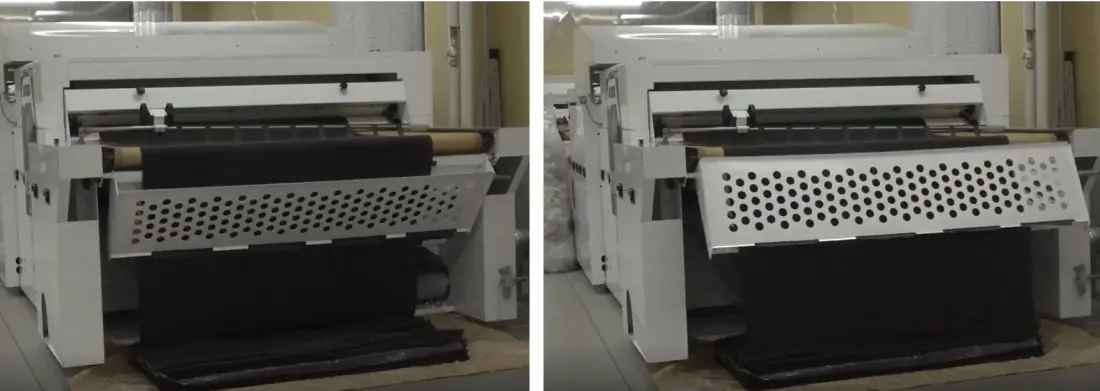
One major problem occurred during fabric sponging (preshrinking), a process that uses heat, steam, and cooling to stabilize fabric dimensions. Severe static electricity developed as the treated fabric was collected in plastic containers. Workers received painful static shocks when handling the fabric, and even wearing work gloves offered little protection.
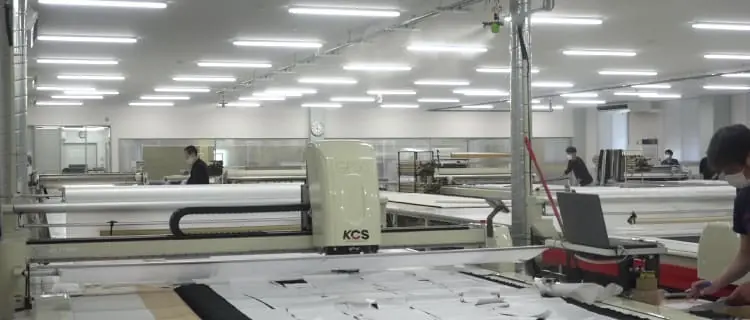
Static electricity also caused fabric to stick to the spreading machine. During winter, sparks sometimes occurred when metal fittings came into contact. These problems placed a heavy burden on workers and reduced work efficiency.
While humidification was needed to control static electricity, wetting or staining fabrics and finished products was unacceptable. The customer therefore consulted IKEUCHI for a solution that could address both concerns.
IKEUCHI first introduced its experience in the textile industry and explained the advantages and disadvantages of different humidification methods, including steam-based and ultrasonic systems.
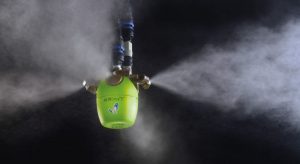
Considering the factory’s ceiling height and equipment layout, IKEUCHI proposed its AirAKI Dry Fog humidification system. Its two-fluid (air-atomizing) humidifiers produce ultra-fine droplets that evaporate quickly.
Initially, the focus was on the fabric spreading machine. However, static electricity was also a serious problem at the sponging machine. A layout was therefore designed to provide targeted humidification around both machines, with flexibility for future expansion.
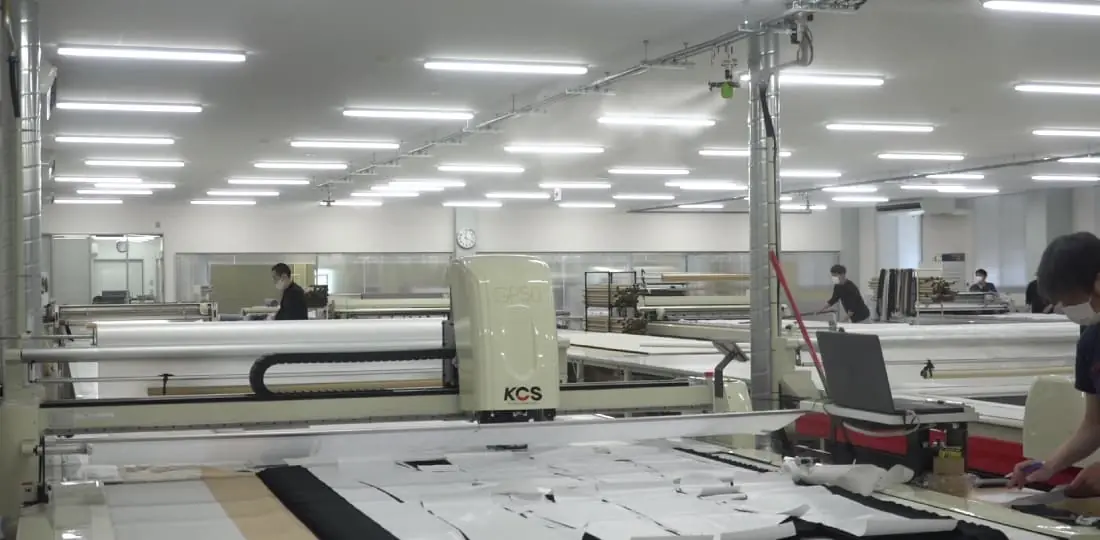
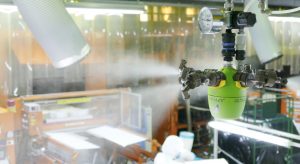
The customer was impressed that the compact humidifiers produced so much visible fog without wetting fabrics or equipment.
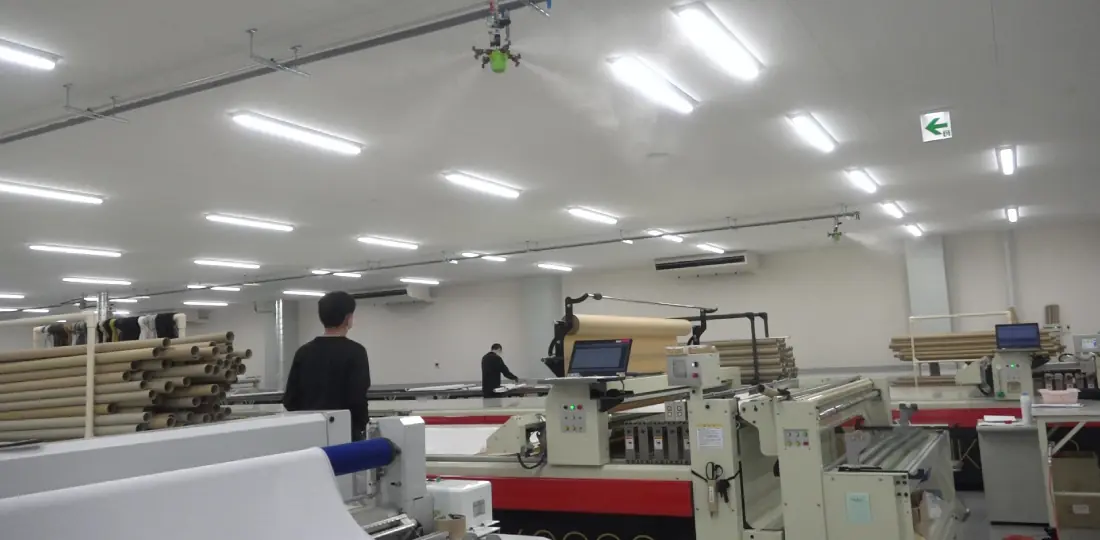
AirAKI is an industrial humidification system that uses AKIMist “E” humidifiers to generate Dry Fog—ultra-fine droplets that do not wet surrounding surfaces. Combined with humidity control panels and sensors, the system maintains optimal humidity levels in production facilities.
By reducing problems caused by dryness and static electricity, AirAKI helps improve productivity and working conditions. It is also highly energy-efficient, with running costs approximately one-fifth those of a comparable steam humidification system.
Relevant SDG goals for this case.