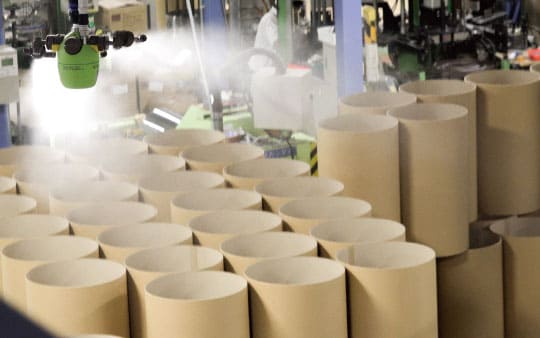
Fiber Drum Manufacturing | Improving Product Quality and Productivity Through Humidity Control

Solutions or Products Featured
in This Case Study
Rather than simply supplying a stand-alone humidifier, IKEUCHI proposed an integrated humidification system and demonstrated its effectiveness through on-site testing.
The customer’s internal cost-benefit analysis estimated a payback period of three to four years, supporting the decision to proceed with installation.
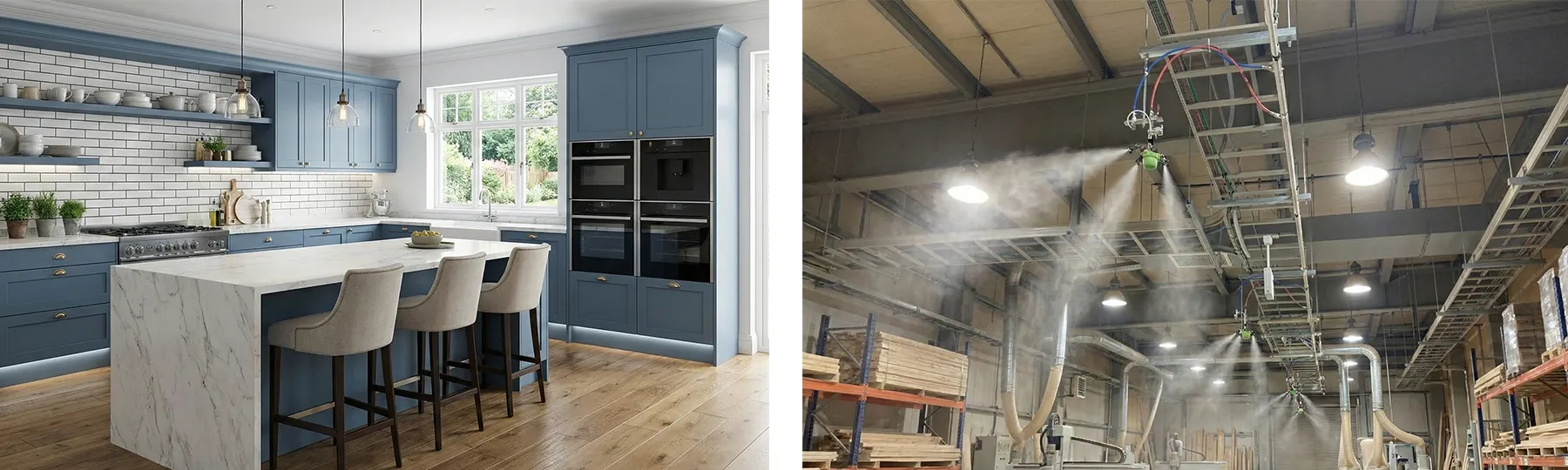
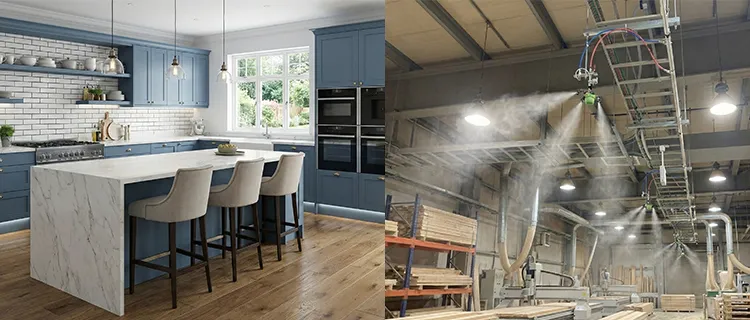
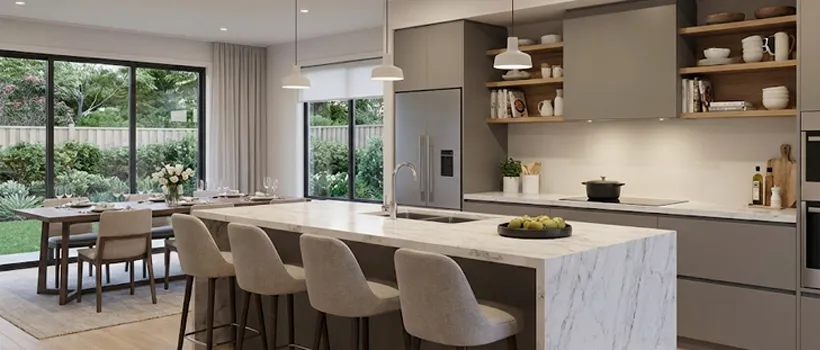
The customer manufactures a wide range of high-end, made-to-order kitchens.
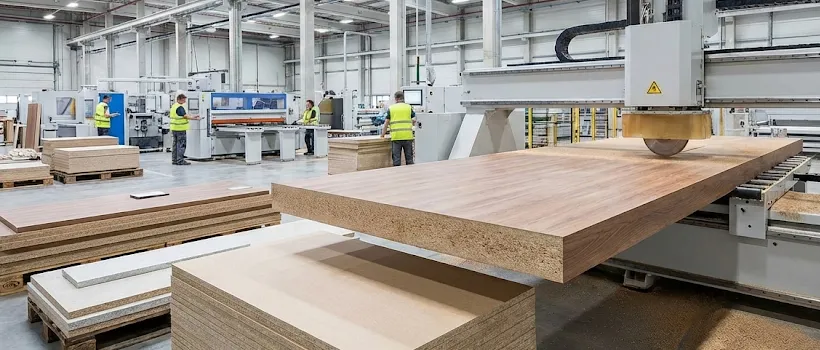
During the countertop cutting process, low humidity caused the particleboard panels to warp before the decorative laminate was applied.
Severely warped panels had to be scrapped. Because each panel was custom-cut for a specific kitchen design, scrapping even a single panel could result in a substantial loss. Warpage-related scrap occurred every year during the dry season from November through March.
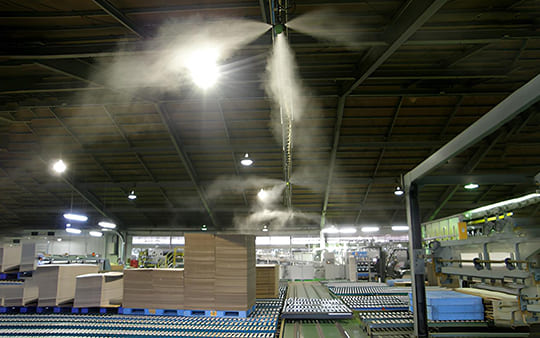
The plant measures 40 m by 60 m, with a ceiling height of 6 m and a volume of approximately 14,400 m³. The dust-collection system causes rapid air exchange, making indoor humidity highly dependent on outdoor humidity levels. The customer was therefore concerned about maintaining stable humidity throughout the year.
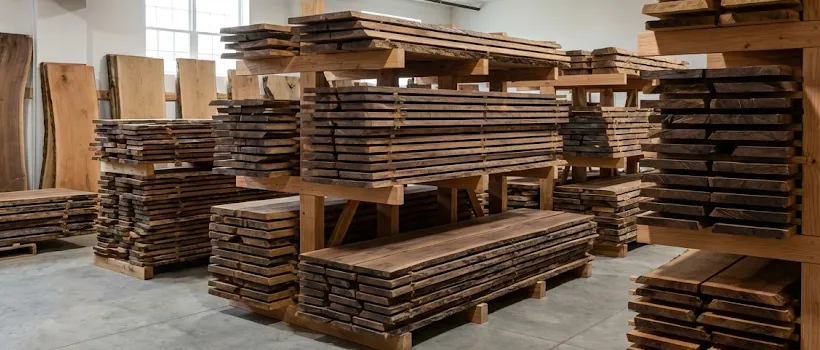
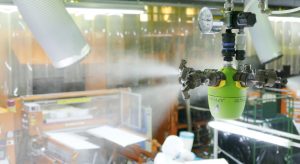
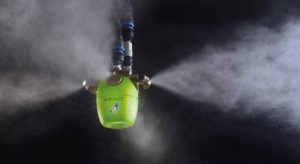
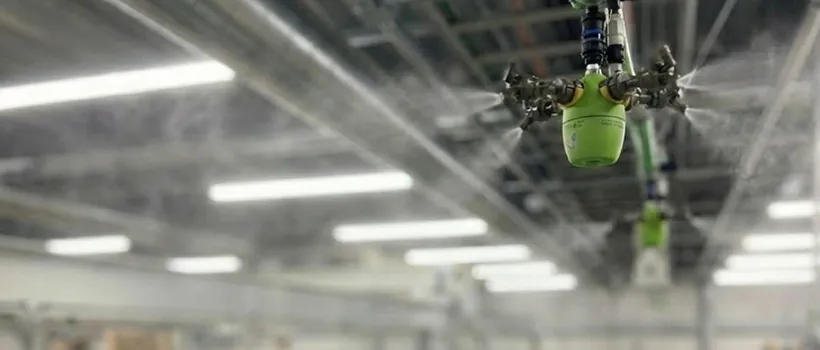
The proposed solution was AirAKI, IKEUCHI’s industrial humidification system designed to prevent production problems caused by static electricity and dry conditions. The system uses compact yet powerful AKIMist “E” humidifiers with AKI03C nozzles to generate Dry Fog with a mean droplet diameter of 7.5 μm.
Because the dust-collection system causes rapid air exchange, uniformly humidifying the entire plant is both impractical and energy-inefficient.
IKEUCHI therefore configured AirAKI for localized humidification, targeting only the areas most at risk of drying-related warpage, including the temporary storage area for uncut particleboard panels and the cutting area.
Humidity sensors were linked to automatic controls that switched the humidifiers on and off based on local humidity levels to maintain the targeted areas at approximately 40% RH.
To support stable operation over the long term, the system also incorporated reverse-osmosis and ion-exchange resin water purification units.
Drawing on its extensive application experience, IKEUCHI tailored the overall humidification system to the specific conditions of this large plant.
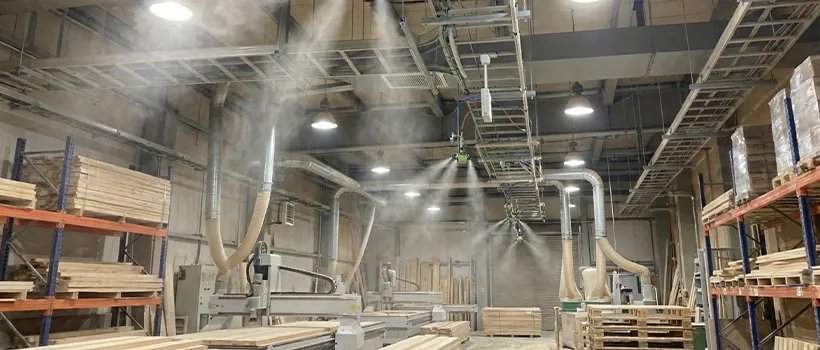
After installation, humidity levels in the targeted areas stabilized at around 40% RH. Monthly scrap caused by warpage during the dry season dropped dramatically, significantly improving production yield.
Brief machine stoppages caused by warped panels jamming in the equipment were also eliminated.
Covering the particleboard panels with blue tarps to prevent drying was no longer necessary, improving production efficiency and simplifying day-to-day work.
With humidity-related defects resolved, issues caused by other factors became easier to identify. The customer is now addressing these newly identified issues, further strengthening its quality control.
Relevant SDG goals for this case.