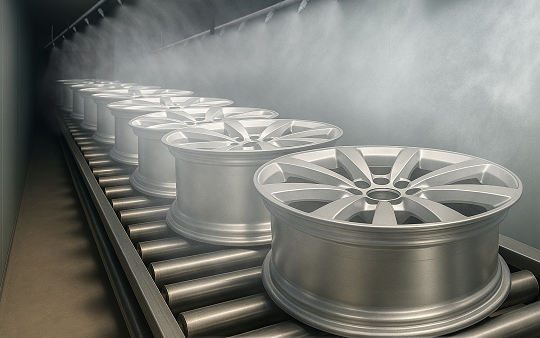
Mist Cooling for Bake-Coated Aluminum Wheels: Shorter Cycle Time, Better Work Environment

Solutions or Products Featured
in This Case Study
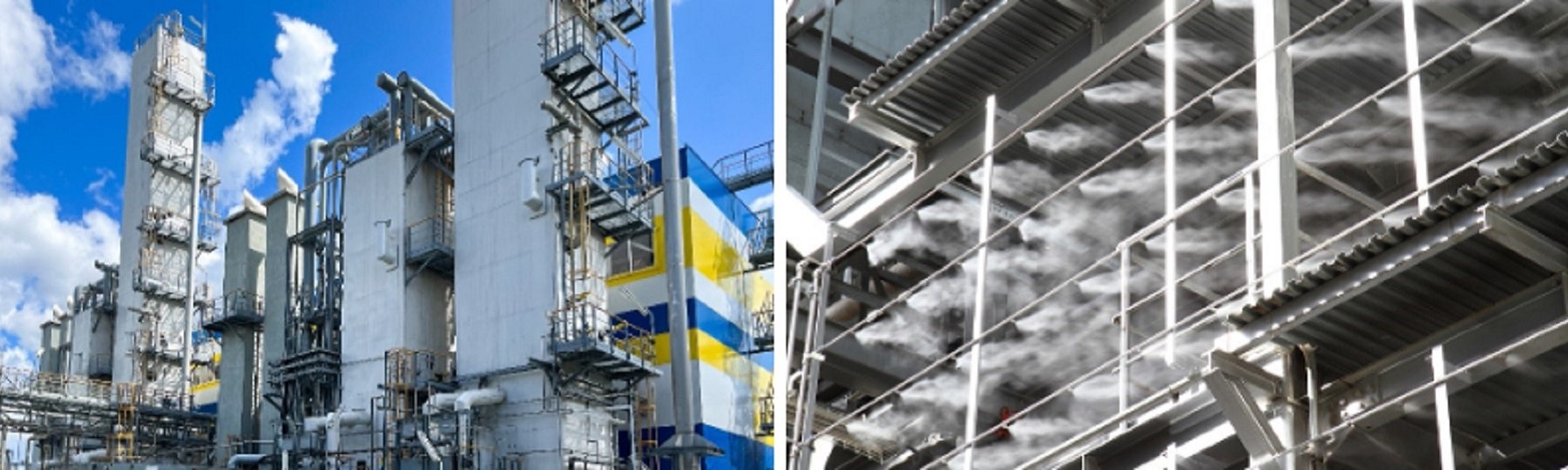
In petrochemical plants, large air compressors are critical equipment that provide a stable supply of high-pressure air and gas required for production processes. They play an important role in supporting various processes, including ethylene production, separation, and reaction processes.
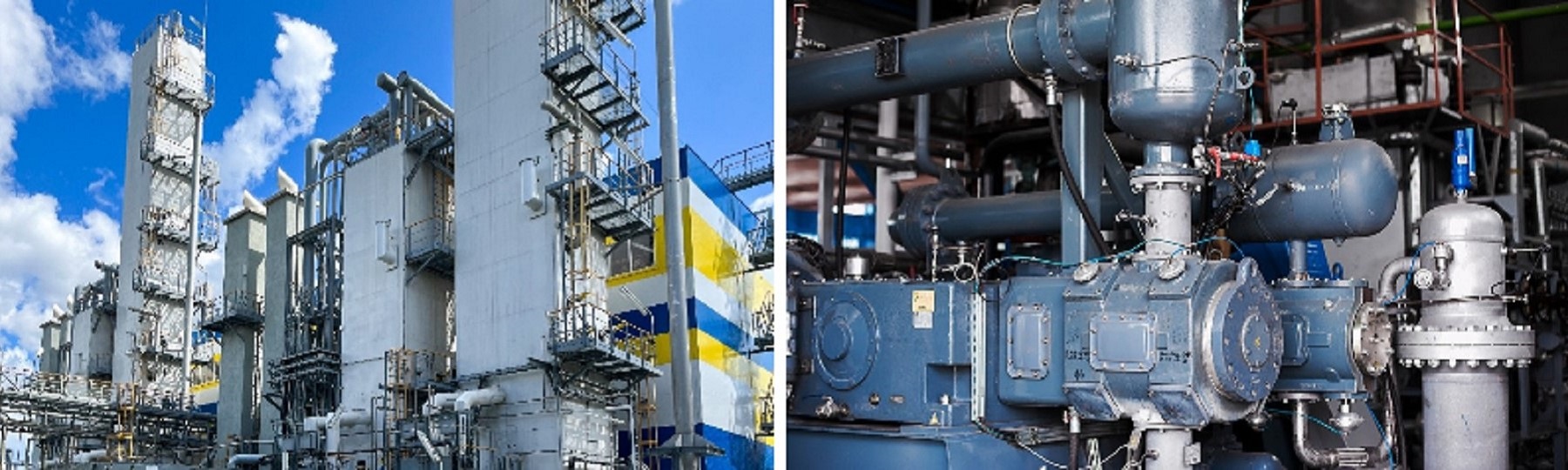
Air compressors draw in atmospheric air, compress it to high pressure, and supply it to each process. However, during summer, rising ambient temperatures cause the air to expand and its density to decrease, reducing the mass of air that can be drawn in and consequently lowering the supply of compressed air.
As a result, the reduced intake air mass can lead to a shortage of compressed air required by each process. This may lower equipment performance, limit processing capacity, and affect the stable operation of the entire plant.
Looking for a solution to this issue, a facility manager at the petrochemical plant consulted IKEUCHI, which has extensive experience in gas turbine inlet air cooling.
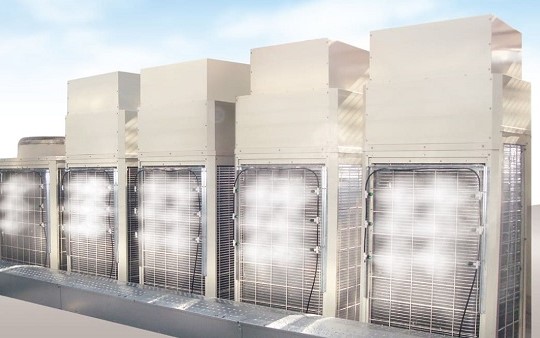
Drawing on its technical expertise and proven experience in gas turbine inlet air cooling, IKEUCHI proposed a compact inlet air cooling system sized for the plant’s existing air compressors.
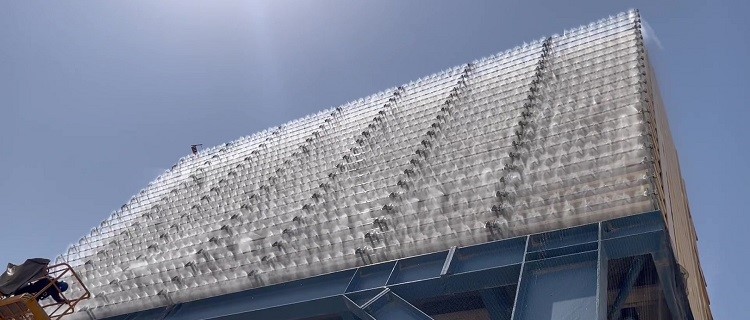
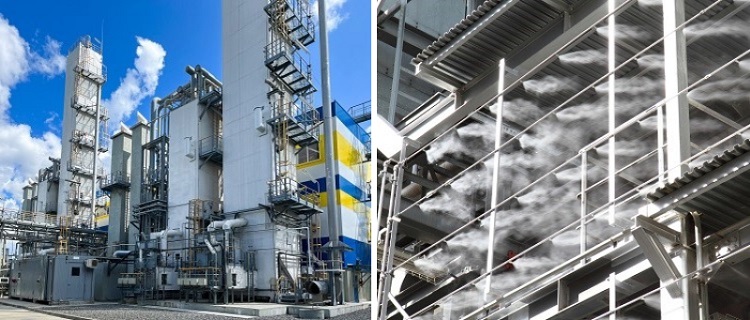
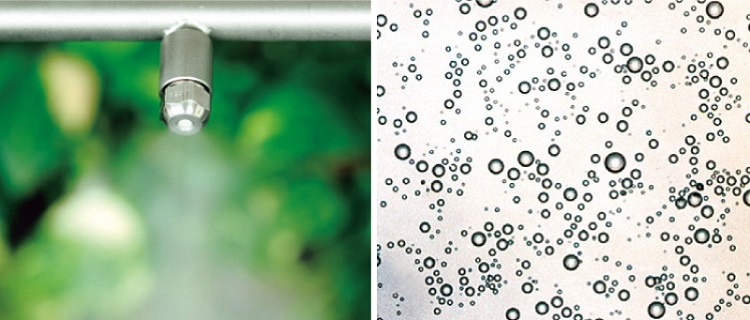
Our specialized spray nozzles generate Semi-Dry Fog, a fine spray with a mean droplet diameter of 10 to 30 μm. It evaporates quickly without wetting surfaces, effectively lowering the inlet air temperature.
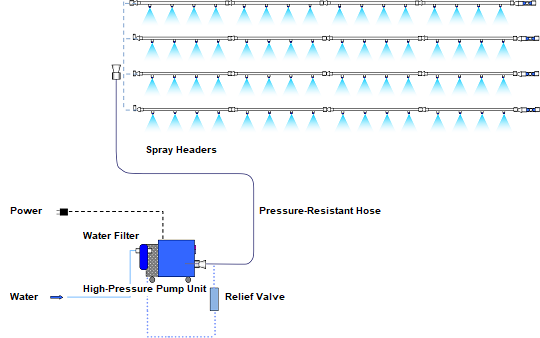
The system consists of spray headers equipped with these nozzles, a high-pressure pump unit that supplies pressurized water, and pressure-resistant hoses and fittings that connect the components.
Despite its simple configuration, the system can be flexibly adapted to on-site requirements.
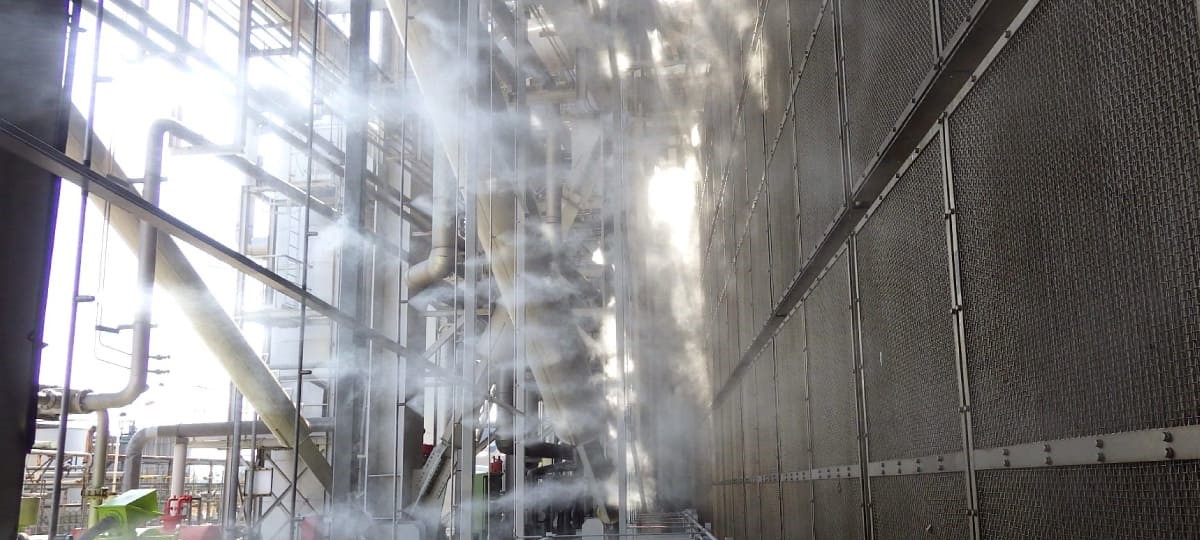
During daytime operation in summer, the system successfully reduced the inlet air temperature by up to approximately 5 °C*, increasing air density.
*This value is not guaranteed. The actual temperature reduction varies depending on operating conditions and weather conditions.
The system is expected to continue contributing to stable plant operation in future summers.
Relevant SDG goals for this case.