In the Print Room, Every Drop Counts: Managing Humidity for Perfect Results

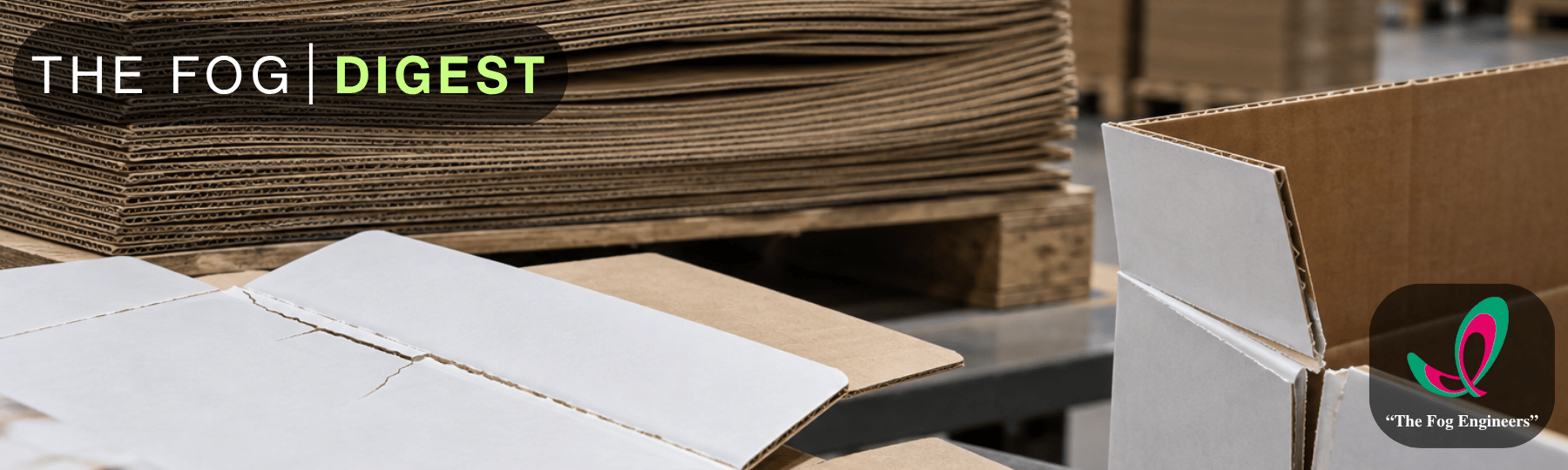
Every corrugated and folding carton plant has some version of the same afternoon. The corrugator ran clean, the board came off flat, and quality signed off. A few hours later, the stack waiting for the folder-gluer has started to curl at the edges. Scores crack when the flaps fold. A glue joint that looked fine on the line pops open on the pallet. Operators adjust the machine, maintenance checks the settings, and the problem comes back the next day.
In many of these cases, the machine isn’t the cause. The air in the building is. Paper constantly trades moisture with its surroundings, and when plant air is dry, board keeps changing long after it has been made.
Paper and paperboard are hygroscopic, meaning they absorb and release moisture until they reach balance with the surrounding air. When relative humidity drops, board gives up moisture. When humidity rises, board takes it back in.
That exchange changes the physical size of the sheet. Cellulose fibers swell as they absorb water and shrink as they dry, and they change much more in width than in length. Most fibers in a sheet line up with the direction the paper traveled through the paper machine, so paper tends to grow and shrink more across the sheet than along it. A liner that is losing moisture is, quite literally, getting smaller.
Corrugated board adds another layer of complexity because it is a composite. Two liners and a fluted medium, often made from different paper grades, are bonded together with starch adhesive. If one liner dries faster than the other, that side shrinks more, and the board bows toward the drier side.
Once board leaves the corrugator, it sits exposed to plant air in stacks, in staging areas, and on the machines themselves. The top sheets and outer edges of a stack have the most direct contact with that air, which is why they are often the first to show trouble. Common symptoms include:
Each of these can look like an isolated machine or material issue. Together, they often point to the same root cause.
Humidity isn’t something to simply add as much of as possible. Board that absorbs too much moisture loses compression strength, which affects how well boxes stack in the warehouse and hold up in transit. Excess moisture also creates warp and adhesive problems of its own.
The real goal is stability: keeping the plant at a consistent, moderate humidity so board moisture stays close to where it was when the board was made. Target ranges vary by grade, product, and process, so most converters set them with input from their paper suppliers and their own quality data. What matters most is that conditions don’t swing widely from shift to shift or from day to day.
In areas where the air runs too dry, Dry Fog humidification raises humidity without putting water on the board. The AKIMist®E Dry Fog Humidifier uses compressed air to atomize water into droplets with a Sauter mean droplet diameter of 7.5µm. Droplets that small bounce off surfaces instead of bursting and wetting them, and they evaporate into the surrounding air. On a converting floor this matters, because visible water on board stacks would cause the very problems humidification is meant to prevent.
Compared with other ways of adding humidity, Dry Fog offers a few clear advantages:
Warped board, cracked scores, and failed glue joints are easy to blame on the machine in front of them. But paper responds to the air around it, and a converting floor with unstable humidity forces the board to keep changing shape long after it leaves the corrugator. Stabilizing that air is often the first step toward a more stable product.