
Achieving Uniform Seedling Growth with Fogging Sprayer from IKEUCHI


Solutions or Products Featured
in This Case Study
Founded in 1953 near the shore of Lake Ontario in Niagara, Ontario, Hendriks Greenhouses has grown from a 10-acre family farm into North America’s leading supplier of indoor gardens. Their operation covers propagation, plant production, and finishing across a diverse mix of ornamental species.
Propagation sits at the foundation of all of it. With a crop mix that includes tissue culture material, unrooted cuttings, and woody cuttings, the Hendriks team has always tailored their approach by species. But across many of those crops, humidity control remained a persistent challenge. We sat down with German Betancourt, Head Grower, and Belal Elhassan, Senior Grower (with Hendriks since 1999), to hear how the AKIMist®E Dry Fog Humidifier changed that.
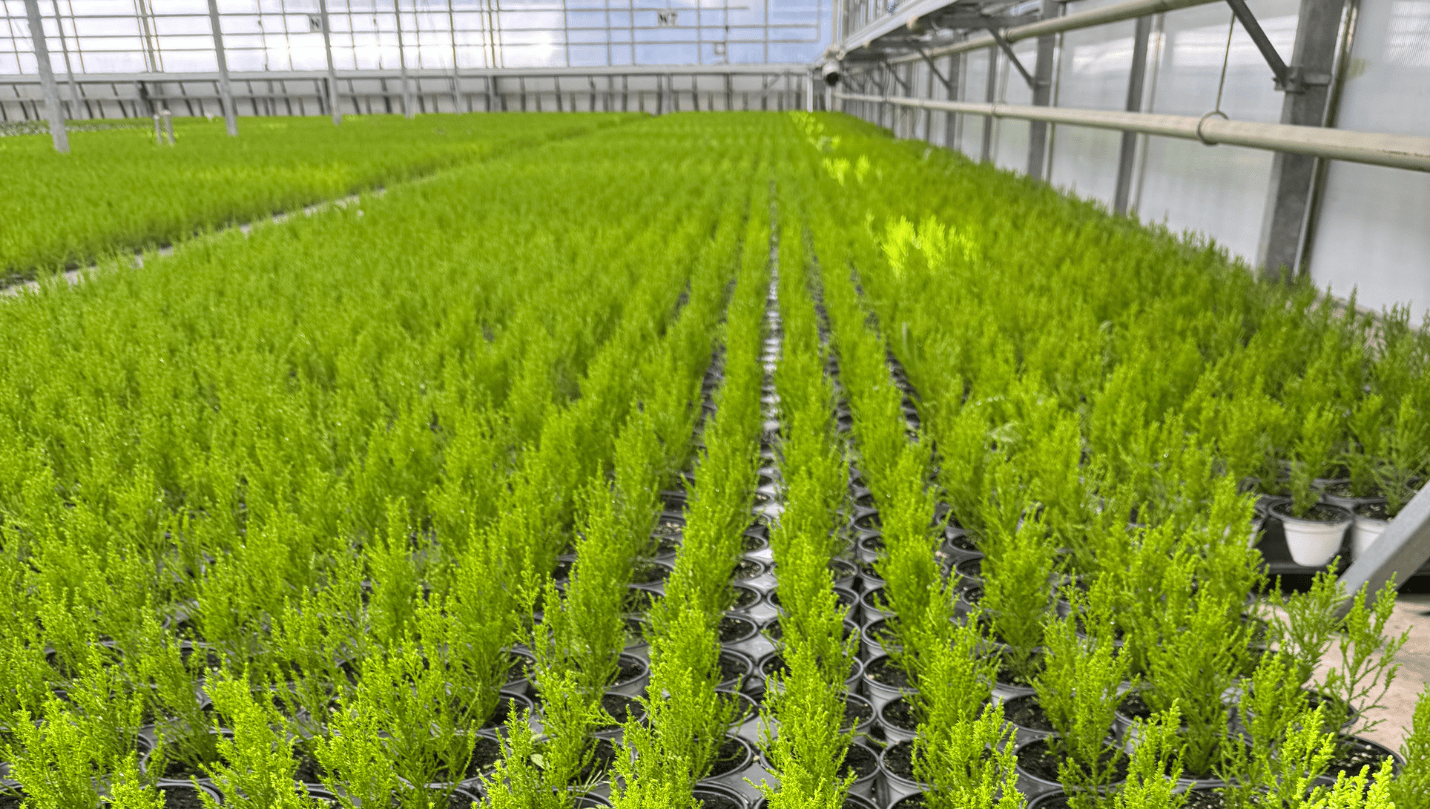
For humidity-sensitive crops like tissue culture material and unrooted cuttings, managing the propagation environment without the right tools meant relying on workarounds. Plastic covers were one of them. “You had to constantly monitor underneath the plastic, uncover, re-cover,” Belal explains. Beyond the labor, condensation dripping unevenly onto trays created inconsistent moisture distribution, and plants without established roots would sometimes stick to the plastic when covers were lifted, pulling free of their media and creating uniformity problems.
A traditional high-pressure fog system was not a realistic alternative. Belal laid out what it would require: stainless steel piping, reverse osmosis water treatment, high-capacity pumps, and significant ongoing electrical and maintenance costs. “And if the system goes down, the whole operation goes down with it.” For a facility managing different crops with different environmental needs across multiple zones, that risk was hard to justify.
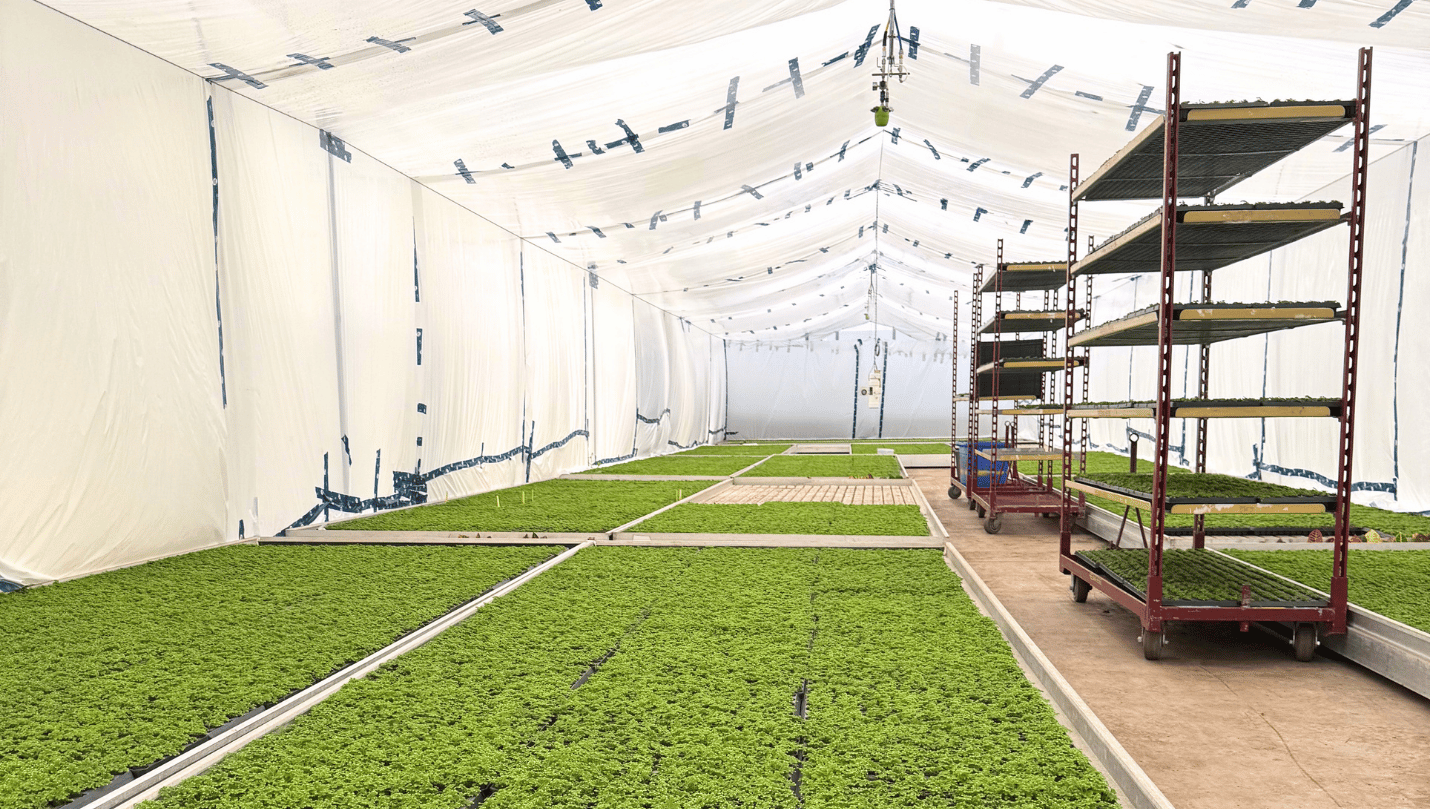
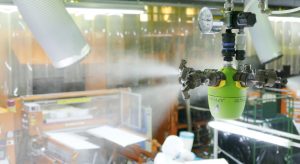
“From the moment I saw it demonstrated, just a small amount of water producing dry fog, I was sold,” Belal says. The AKIMist®E produces droplets fine enough to evaporate before contacting surfaces, adding moisture to the air without wetting plants, media, or surrounding infrastructure. For a team already accustomed to matching methods to crop type, that precision was a natural fit.
Integration was straightforward. Hendriks already ran a compressor system for irrigation, so the AKIMist®E tapped directly into the existing air line. Connecting it to their Argus environmental control system took roughly a day of programming. “We kept the configuration simple and practical,” German notes.
The biggest improvement was uniformity. Plastic covers never distributed humidity evenly across a tray, leaving peaks, valleys, and condensation hot spots. The AKIMist®E humidifies an enclosed zone continuously and evenly, so root stimulation is consistent across every tray. “With the AKIMist®E, plants can be a week or two ahead of schedule,” German says.
For tissue culture crops, the grading impact is concrete. Hendriks typically runs multiple sorting passes before crops move to the production floor. With more even root development from the start, they anticipate cutting those rounds from three to five passes down to two.
Winter operations show it most clearly. Overwatering in cold months is a serious risk; wet media in low temperatures stays wet for a long time. “You don’t want to see a guy with a hose in midwinter,” German says. The AKIMist®E maintains humidity in the propagation zone without any manual watering.
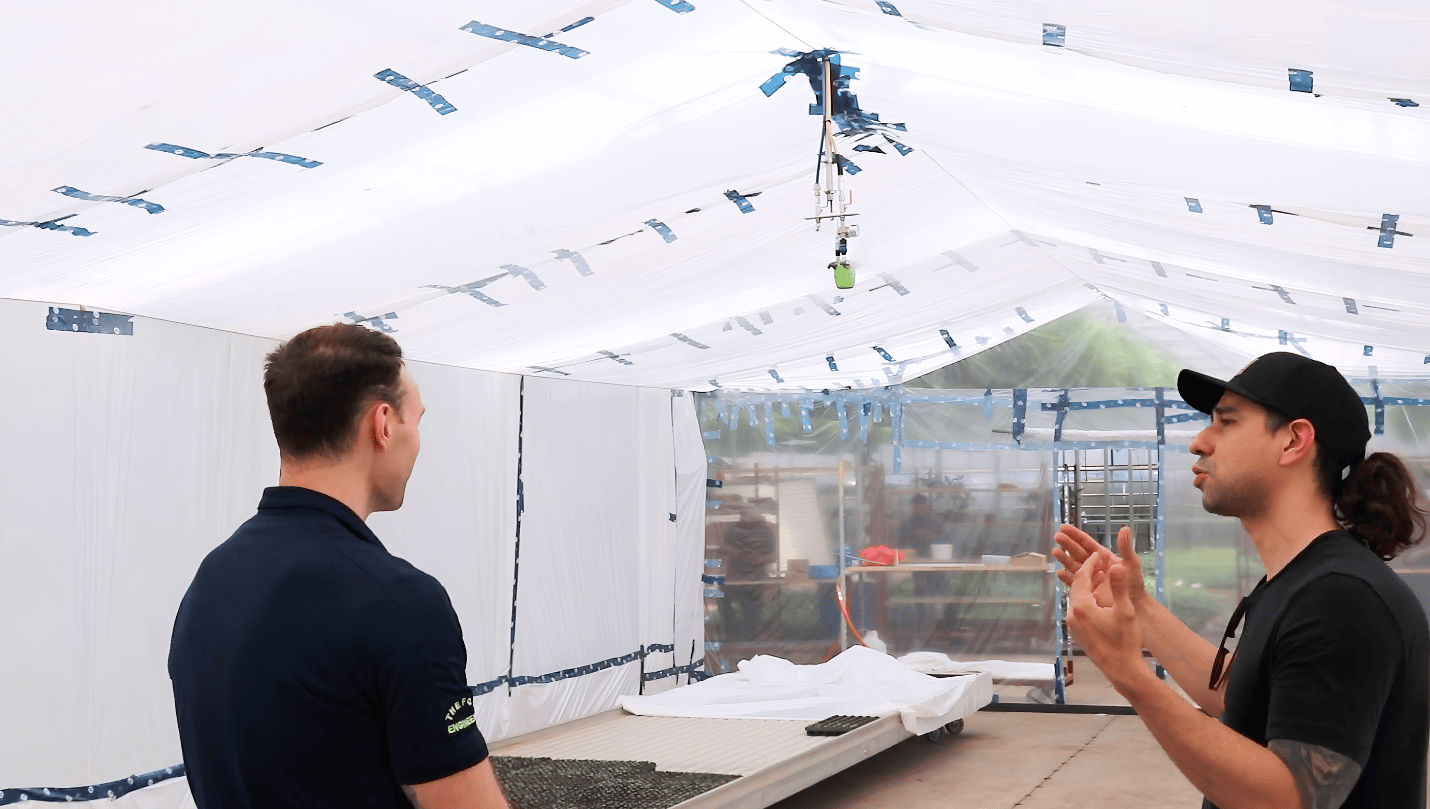
“A quick once-a-month preventive cleaning using a pin to clean the nozzles is all that’s needed,” German says. No reverse osmosis water treatment required. Each unit operates independently, so if one goes offline, the others keep running. Nozzles are field-replaceable in minutes. That resilience stands in direct contrast to centralized high-pressure systems where a single failure takes down the whole zone.
“Cheaper option for what we need, saves manpower and labor, high accuracy, low risk,” Belal summarizes. He adds that the benefits compound: crop uniformity, labor savings, low maintenance, and a summer cooling capability they had not originally planned for.
Would they recommend it? “You definitely need to have it in your toolbox,” German says.
German also noted the support experience: “The support you provide is not just ‘here’s an item, good luck.’ You’ve been pretty good at helping us design the location, the number of units, thinking through the pros and cons. That additional support is important for us as customers, especially when it’s something new.”
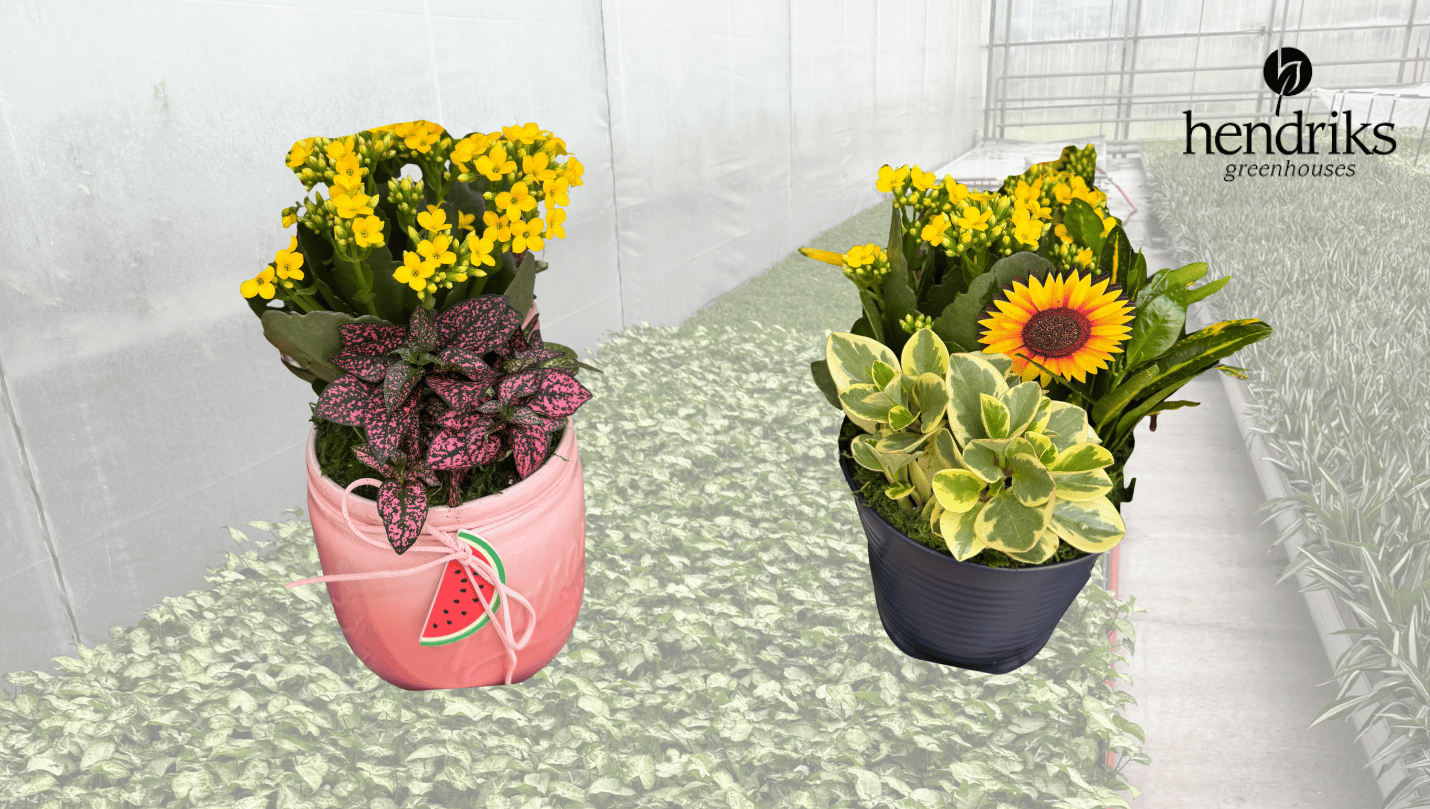
Hendriks Greenhouses is North America’s leading supplier of indoor gardens, serving wholesale customers across Canada and the United States. Browse their plant collections, seasonal catalogues, and more at the links below.
A sincere thank you to German Betancourt and Belal Elhassan at Hendriks Greenhouses for sharing their time and experience with us.
-The Fog Engineers at Ikeuchi USA