Enhance Winter Printing Efficiency with Dry Fog Humidifier AKIMist

Picture this: a flawless print job ruined by smudging ink or misaligned colors, all because of an invisible culprit—humidity. Precision printing demands more than just high-end equipment and top-tier ink; it requires mastery over the environment itself. One often-overlooked factor that can make or break print quality is humidity. Understanding the relationship between humidity, print ink, and the overall printing process is essential for ensuring optimal output and reducing costly errors.
Humidity refers to the amount of moisture present in the air, which directly influences paper, ink, and printing machinery. If the air is too dry, paper can become brittle, leading to static buildup, curling, or misfeeds. Conversely, excessive humidity can cause paper to absorb moisture, leading to wrinkling, ink bleeding, and poor color registration.
Print ink is also highly sensitive to humidity. Different types of inks—whether water-based, solvent-based, or UV-curable—respond differently to moisture in the air.
Static buildup due to dry air can cause paper misfeeds, stacking issues, and ink misalignment. Implementing a humidification system can help maintain optimal moisture levels, reducing static and improving paper handling.
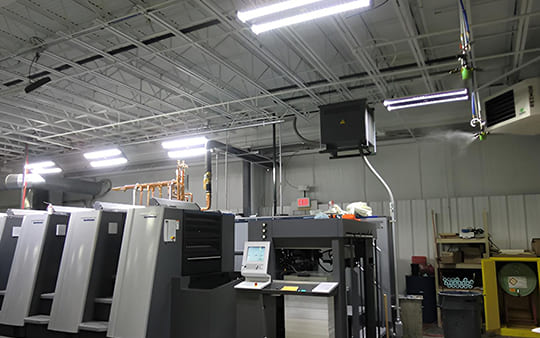
For print applications requiring precise color reproduction, humidity must be controlled to prevent inks from drying too fast or too slow. Using a dry fog humidification system, such as the AKIMist, ensures consistent moisture levels without wetting the environment, keeping ink performance stable.
Uncontrolled humidity can cause paper to expand or contract, leading to registration issues where colors do not align properly. Maintaining a relative humidity (RH) of 40-60% in print rooms helps stabilize paper dimensions and improves print accuracy.
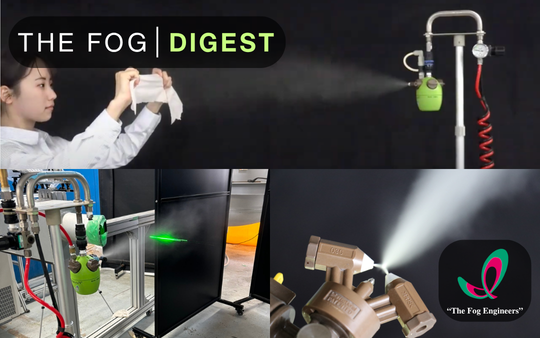
The AKIMist®E dry fog humidification system provides the ideal balance of humidity control for production printing. Unlike conventional humidification methods, AKIMist®E generates ultra-fine water droplets that evaporate instantly, ensuring even moisture distribution without wetting surfaces. This automated system continuously monitors and adjusts humidity levels, maintaining the perfect environment for high-quality print output.
Maintaining optimal humidity in production print environments is not just about comfort—it directly affects print quality, ink performance, and overall operational efficiency. Dry fog humidification with AKIMist®E offers the most effective solution by providing automated, precise control over humidity levels. By implementing this technology, print businesses can achieve higher consistency, reduce waste, and improve customer satisfaction. Investing in humidity control is not just an option—it’s a necessity for achieving the highest standards in production printing.