Corrugated Cardboard Manufacturing | Preventing Score Line Cracking

Solutions or Products Featured
in This Case Study
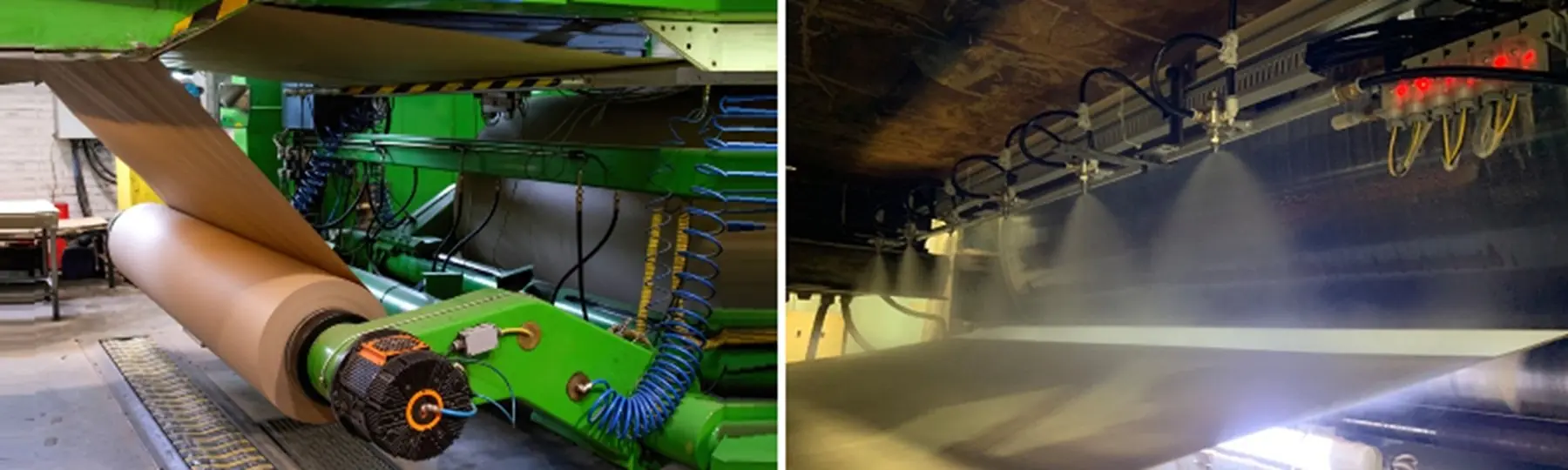
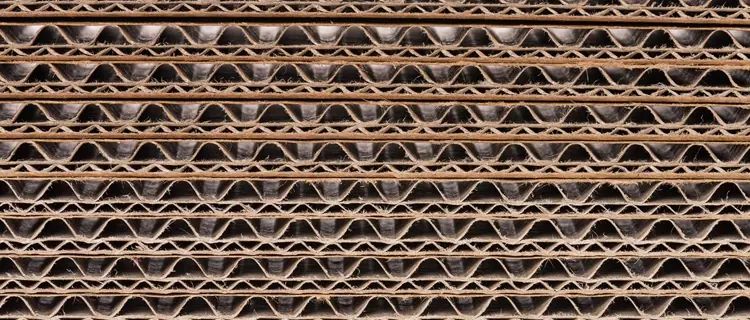
A corrugator is a machine that continuously produces corrugated board sheets by forming medium paper into a fluted shape and bonding it with liner papers on both sides.
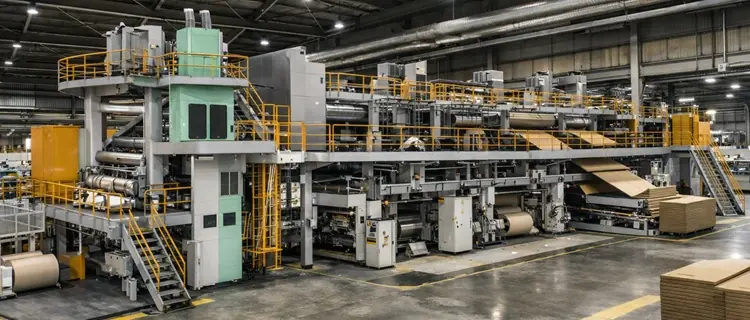
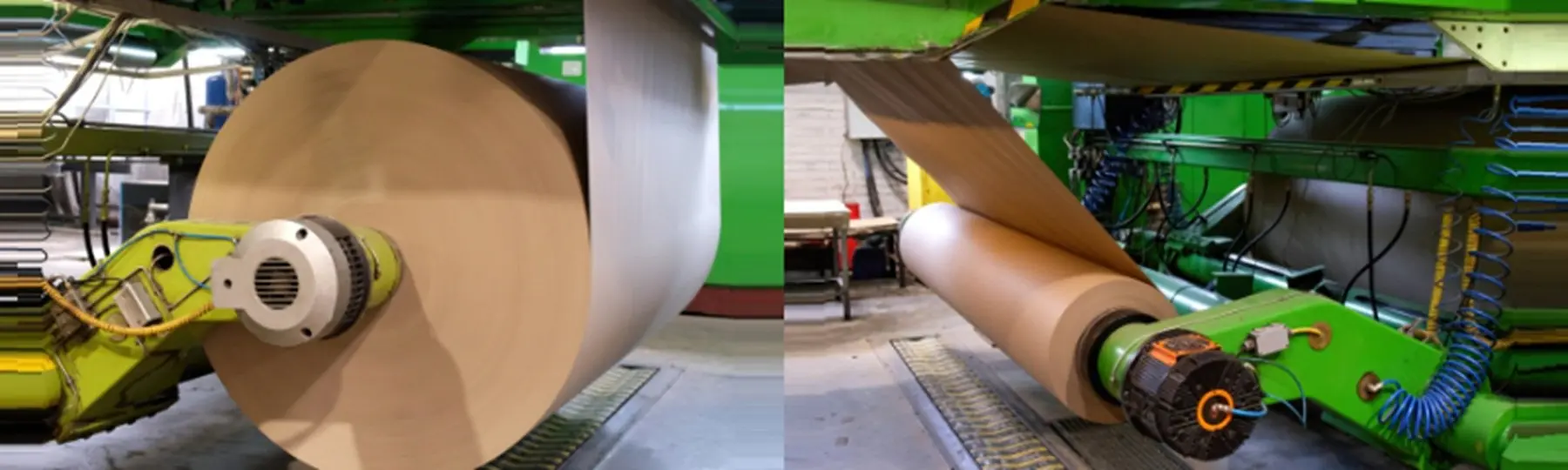
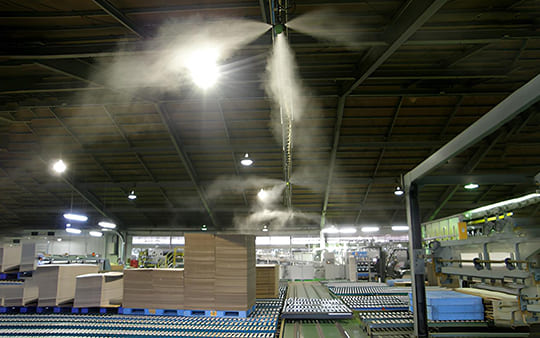
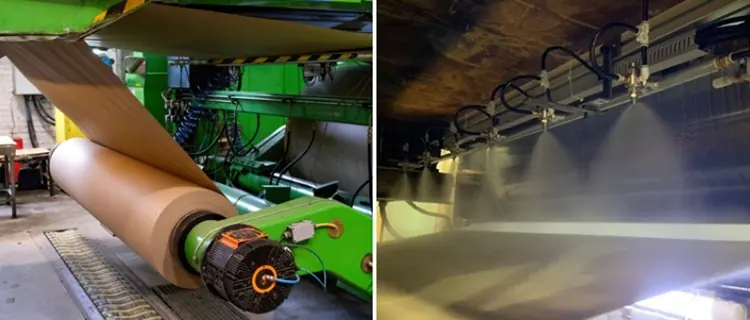
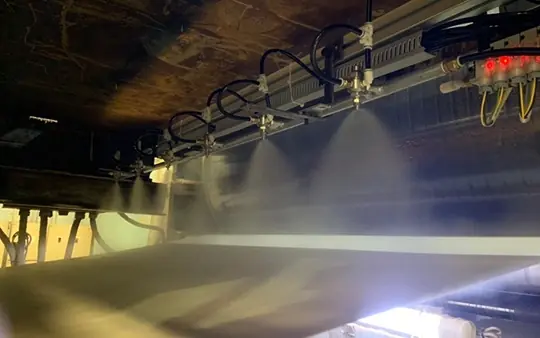
A corrugated board sheet manufacturer was using IKEUCHI pneumatic spray nozzles* on its corrugator to condition the moisture level of the paper materials.
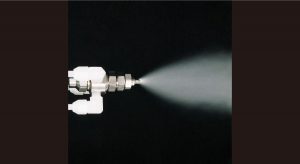
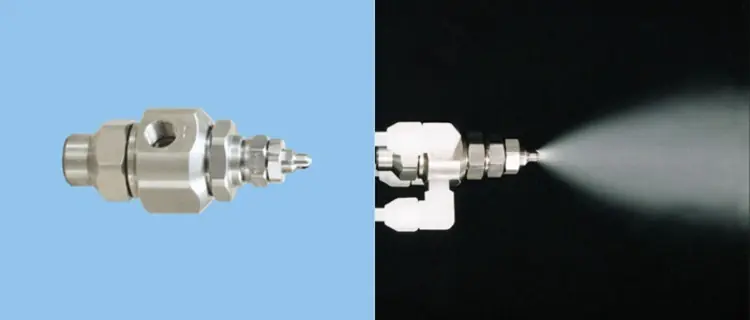
*Pneumatic spray nozzle: Also known as a twin-fluid or air-atomizing nozzle, it atomizes liquid by mixing it with compressed air. Compared with hydraulic spray nozzles, also known as single-fluid nozzles, which spray liquid by pressurizing it with a pump, pneumatic spray nozzles can produce finer mist and are well suited to low-volume moisture application.
In dry conditions, corrugated-board base paper loses moisture and shrinks, increasing the risk of warping. When the moisture balance among the face liner, fluted medium, and back liner becomes uneven, the finished sheet is more likely to develop defects such as upward or downward warpage.
To prevent these defects, the plant applied a controlled amount of water to the liner and medium papers using spray nozzles before the layers were bonded together.

The issue surfaced when the customer reported that the inline vision inspection system had detected water droplets on the sheet after the spray zone.
IKEUCHI inspected the line and identified the cause: spray mist was drifting upward, accumulating on overhead piping, and condensing into droplets that fell onto the sheet surface.
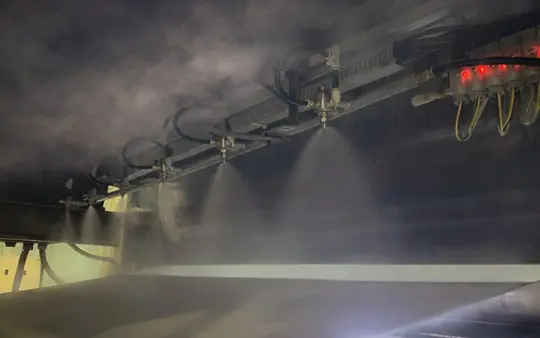
IKEUCHI found that excessive compressed-air pressure was causing the spray to become over-atomized and drift upward. To optimize the spray conditions, IKEUCHI proposed lowering the air pressure to the proper range while setting the liquid pressure slightly higher
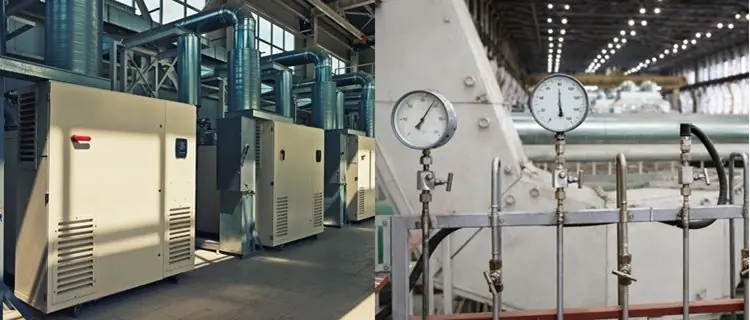
IKEUCHI also recommended a lower-air-consumption model in the same nozzle series.
The change made it possible to reduce air pressure while maintaining nearly the same spray flow rate.
For verification, the customer installed the recommended model.
Adjusting the pressure conditions and switching to the recommended nozzle model eliminated the issue of water droplets falling onto the corrugated board sheet. Since then, the plant has maintained a stable moisture-conditioning process that helps prevent sheet warping.
Relevant SDG goals for this case.