
Humidification around Banbury Mixer Prevents Static Ignition and Fire in Tire Manufacturing



Solutions or Products Featured
in This Case Study

This case study introduces how our humidification system was implemented at a plant that fills aerosol formulations, such as paint, into spray cans as part of its static-control strategy.
In aerosol filling operations handling flammable synthetic resin coatings and propellant gases, an electrostatic spark can serve as an ignition source. The risk intensifies during the dry winter season, when low humidity accelerates electrostatic charge buildup.
Basic measures such as grounding and antistatic garments were already in place. However, static electricity is invisible, and operators continued to work under the stress of a risk they could not see.

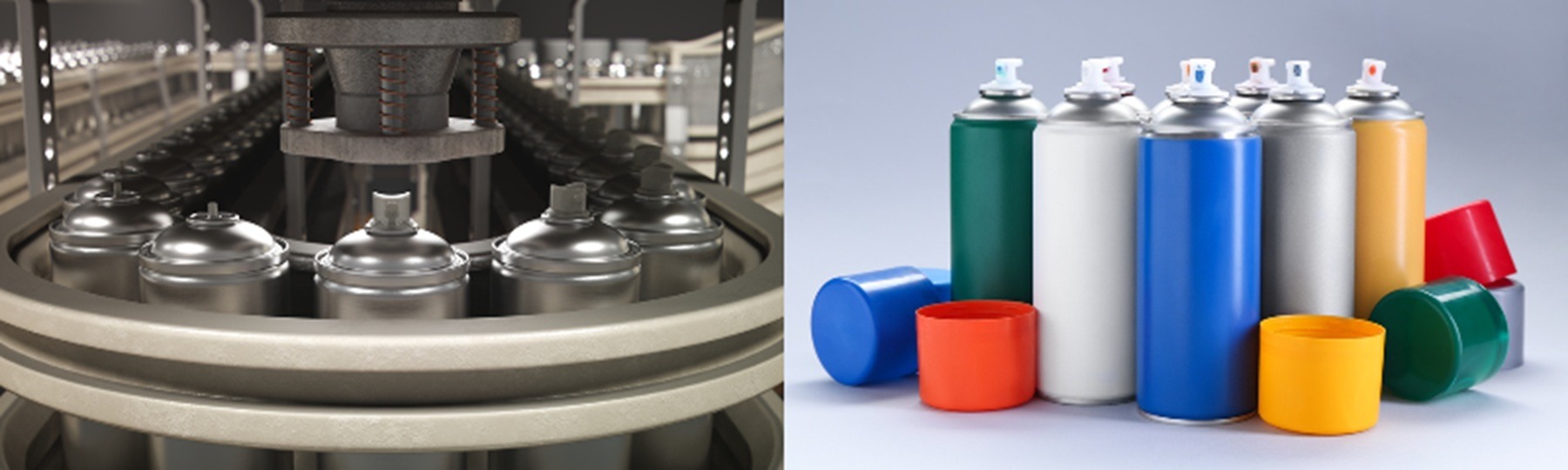
Touch-up spray products and the aerosol can filling process

Spark from electrostatic discharge (ESD)
“Once a fire or accident occurs, it’s already too late. We want to reduce the ignition risk as much as possible.”
With that in mind, the customer approached IKEUCHI in search of a more fundamental solution to static control.
Maintaining adequate indoor humidity is an effective way to suppress electrostatic charge buildup. However, because the process handles solvents and gases, the plant is equipped with extensive local exhaust ventilation (LEV) systems.
As a result, ventilation rates are high, making it difficult not only to raise humidity through humidification, but also to maintain the target humidity level.
In addition, the process area is designated as an explosion-proof area. Any humidification system therefore had to comply with applicable explosion-protection requirements.
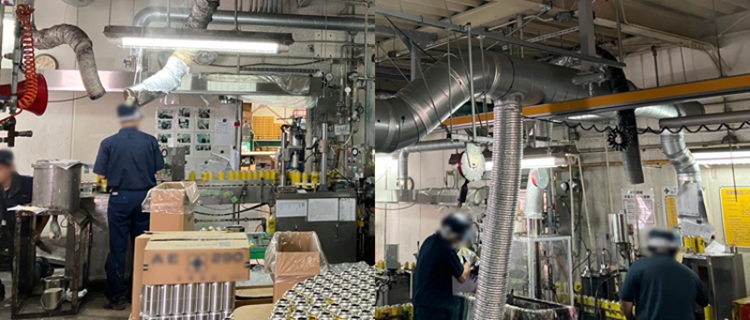
Extensive local exhaust ventilation results in high ventilation rates, making it difficult to raise humidity.
The system selected was AirAKI, a Dry Fog humidification system that uses compressed air to atomize deionized water into an ultrafine fog. Because it operates without electricity, it is well suited for use in explosion-proof areas.
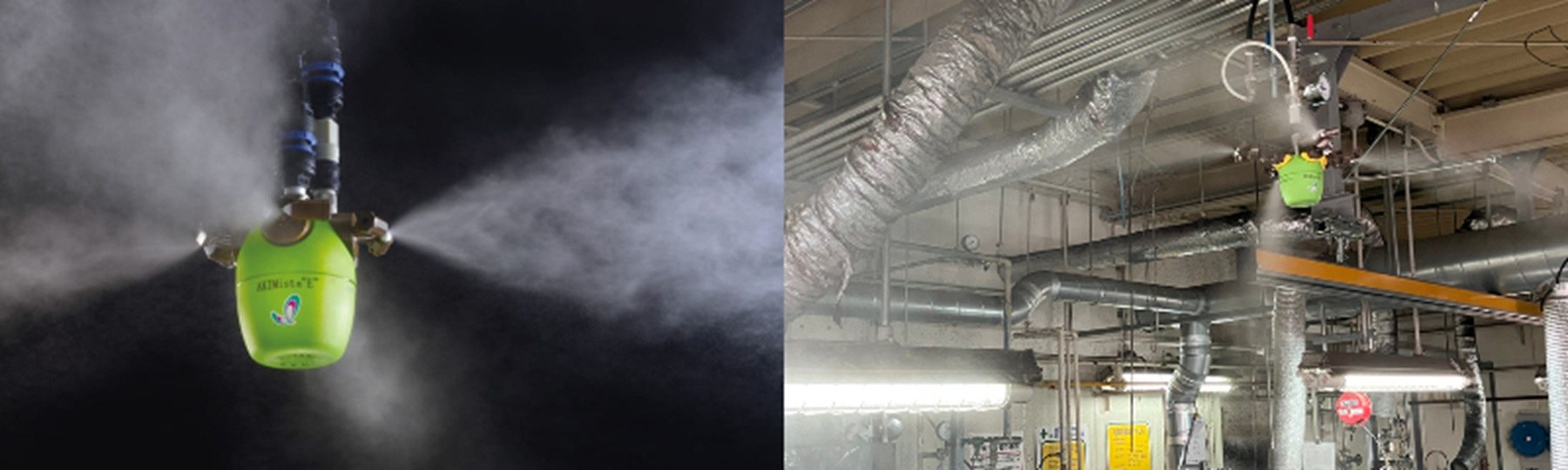
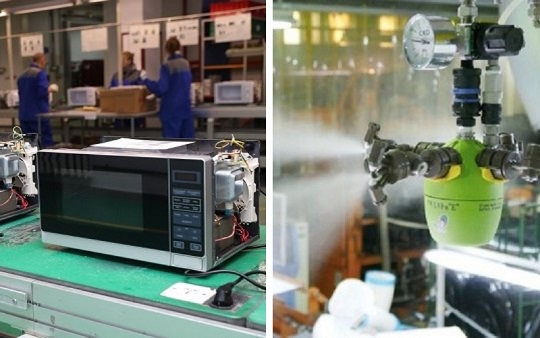
Left: Dry Fog Humidifier | Right: AirAKI suitable for explosion-proof areas
Based on this, we prioritized reliably humidifying the areas where static control was most critical and proposed a localized humidification approach focused on the area around the filling line.
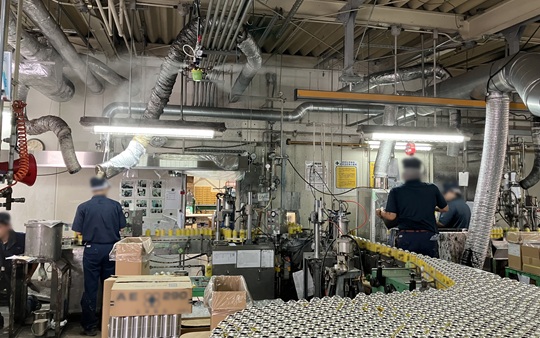
Localized humidification targeting the filling line area
To address concerns that the mist might wet the products, we conducted an on-site demonstration. This allowed the customer to confirm that the system could humidify the target area precisely without wetting the products.
We then measured the humidity distribution using sensors and used the data to determine the optimal installation locations and number of units. By confirming effectiveness through both on-site testing and quantitative data, we were able to gain the customer’s confidence in the proposed system.
Each humidifier was fitted with a valve, allowing operators to easily turn it on and off as needed at the point of use. This configuration enables humidification only when and where it is required.
Following implementation, humidity conditions in the plant stabilized, helping reduce the risk of fires caused by static electricity. The result was a work environment in which operators could focus on their tasks without constant anxiety about an invisible risk.

Although the system was initially introduced to address dry winter conditions, the plant now also uses AirAKI’s evaporative cooling effect to help reduce heat stress in summer. Operators report that it feels around 2–3°C cooler.
Pre-installation water quality testing revealed that the local tap water contained a high level of minerals. If sprayed without treatment, impurities such as silica could become airborne and clog the humidifier nozzles.
To address this risk, we proposed installing an RO (reverse osmosis) purifier and an ion-exchange deionizer alongside the humidifiers so that clean deionized water could be used. One year after implementation, the system continues to operate stably, with no nozzle clogging or fouling.

Left: RO (Reverse Osmosis) Water Purifier | Right: Ion-Exchange Deionizer
In addition to humidification, the water treatment system also supplies deionized water for the production process, where it is used to dilute the spray formulation. This has also helped reduce the cost of purchasing deionized water from outside suppliers.