Enhancing Quality and Efficiency with Humidity Control in Appliance Manufacturing


Solutions or Products Featured
in This Case Study

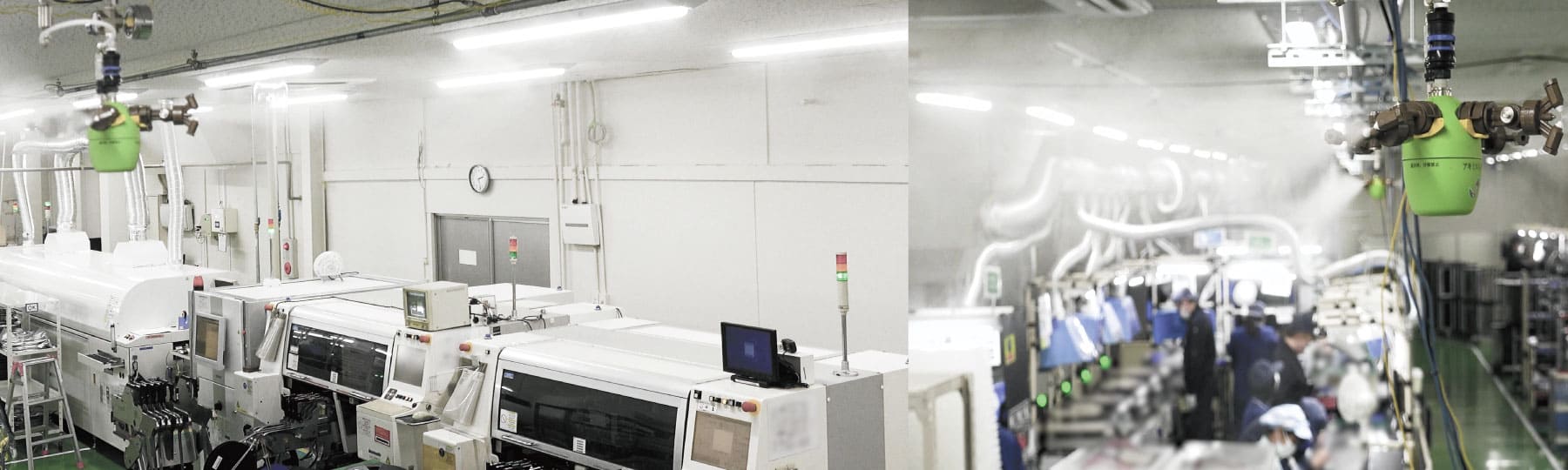
At an electronics manufacturing services (EMS) plant, humidity control across the production floor had long been a challenge.
Although standard anti-static measures such as grounding straps and conductive flooring were already in place, when relative humidity dropped to 20–30% RH, momentary electrostatic buildup—as indicated by higher surface potential—became more likely.
This raised concerns about the risk of electrostatic discharge (ESD) damage to electronic components during assembly.

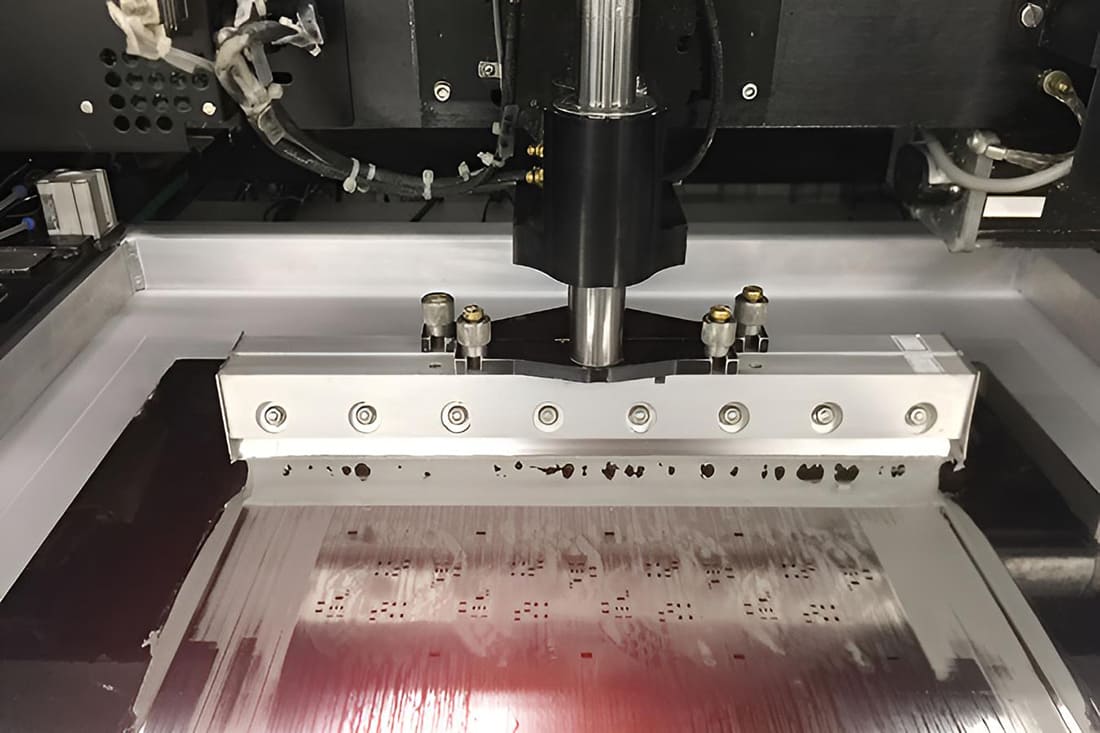
In the surface-mount technology (SMT) process, solder paste printing is one of the most critical steps. Maintaining a stable solder paste temperature and constant humidity inside the printer is essential for improving SMT quality.
While temperature could be managed through air-conditioning adjustments, humidity control remained extremely difficult and posed a major challenge to stabilizing production quality.
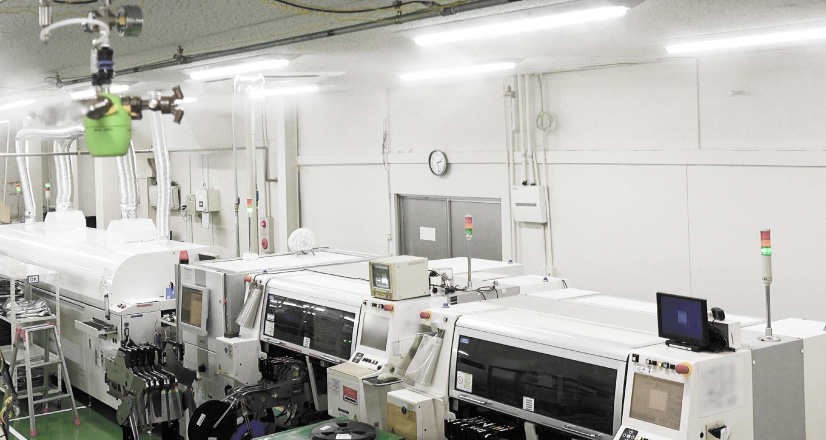
The plant had been using large air-conditioning units with built-in humidification, but the system was highly inefficient. It consumed substantial amounts of electricity and water while failing to raise humidity anywhere near the target of 45% RH.
To address these challenges, IKEUCHI proposed its AirAKI industrial humidification system.
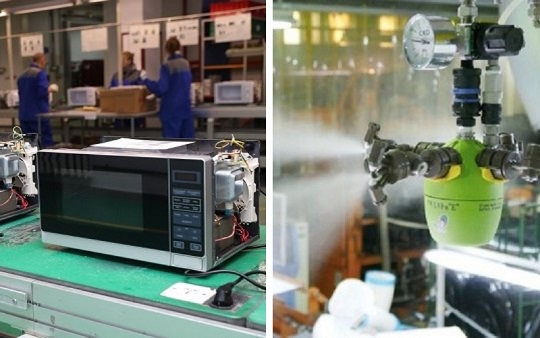
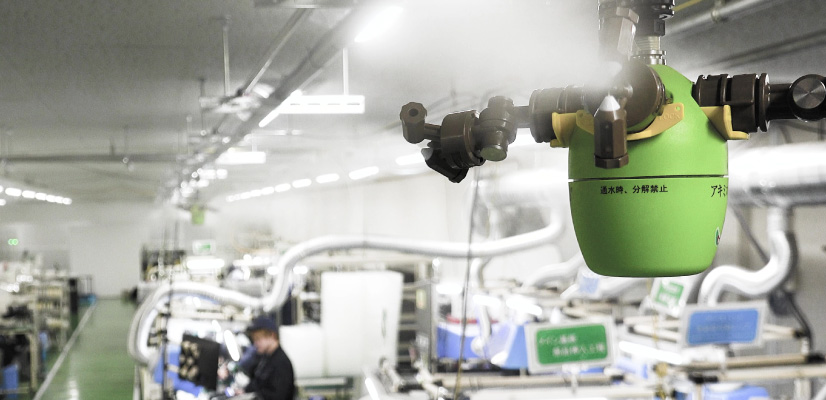
AirAKI generates non-wetting ultrafine “Dry Fog,” with a mean droplet diameter of 10 μm or less, enabling precise humidity control without wetting products or equipment.
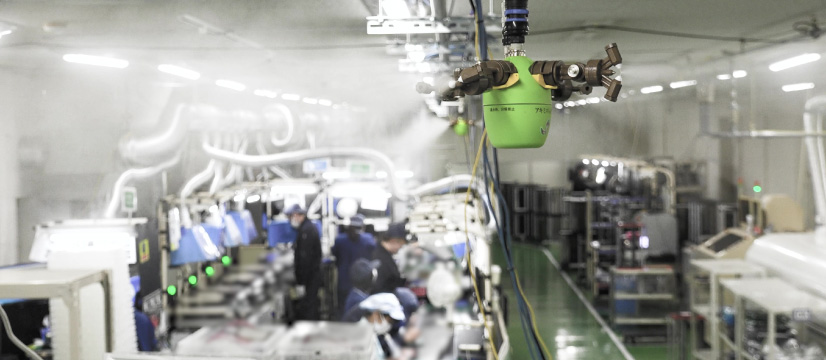
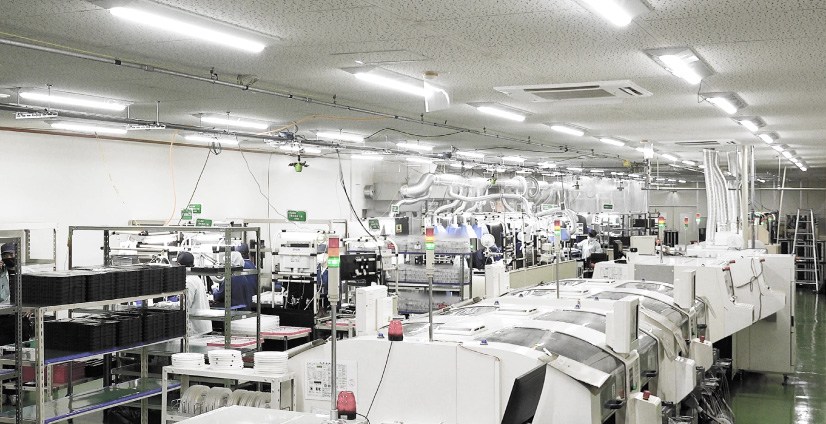
The system was designed and installed based on the plant’s overall layout and equipment arrangement, taking into account factors such as humidity sensor locations, optimal humidification nozzle placement, spray direction, and the presence of obstructions.
A new control system featuring stepwise spray-pressure control was adopted at this plant. It automatically adjusts spray pressure according to humidity levels, allowing stable humidity to be maintained using only the minimum required amount of water and compressed air.
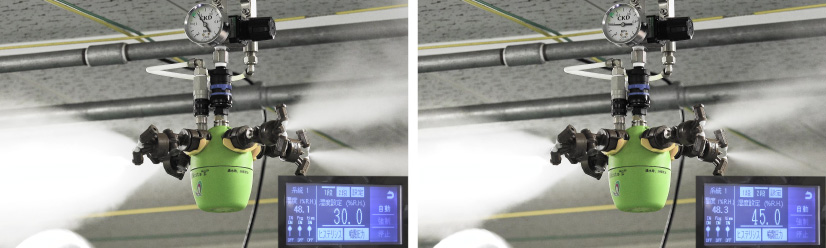
Example of stepwise spray-pressure control. Left: “Step 1” humidity set at 30% RH; right: “Step 2” humidity set at 45% RH. Spray flow rate is adjusted according to humidity level to help prevent over-humidification and improve energy efficiency.
The use of purified water also prevents adverse effects on equipment, such as calcium scale buildup.
After AirAKI was installed, the plant was able to maintain humidity consistently at around the target level of 45% RH, resulting in a range of benefits.
In addition, proper humidity control appears to have helped reduce employee absences due to influenza and other viral illnesses, providing the added benefit of lower downtime losses.
The customer plans to continue considering Dry Fog humidification systems whenever future factory or process expansions require stable humidity control.
Further Reading: 7 Benefits of Dry Fog Humidification in SMT Processes